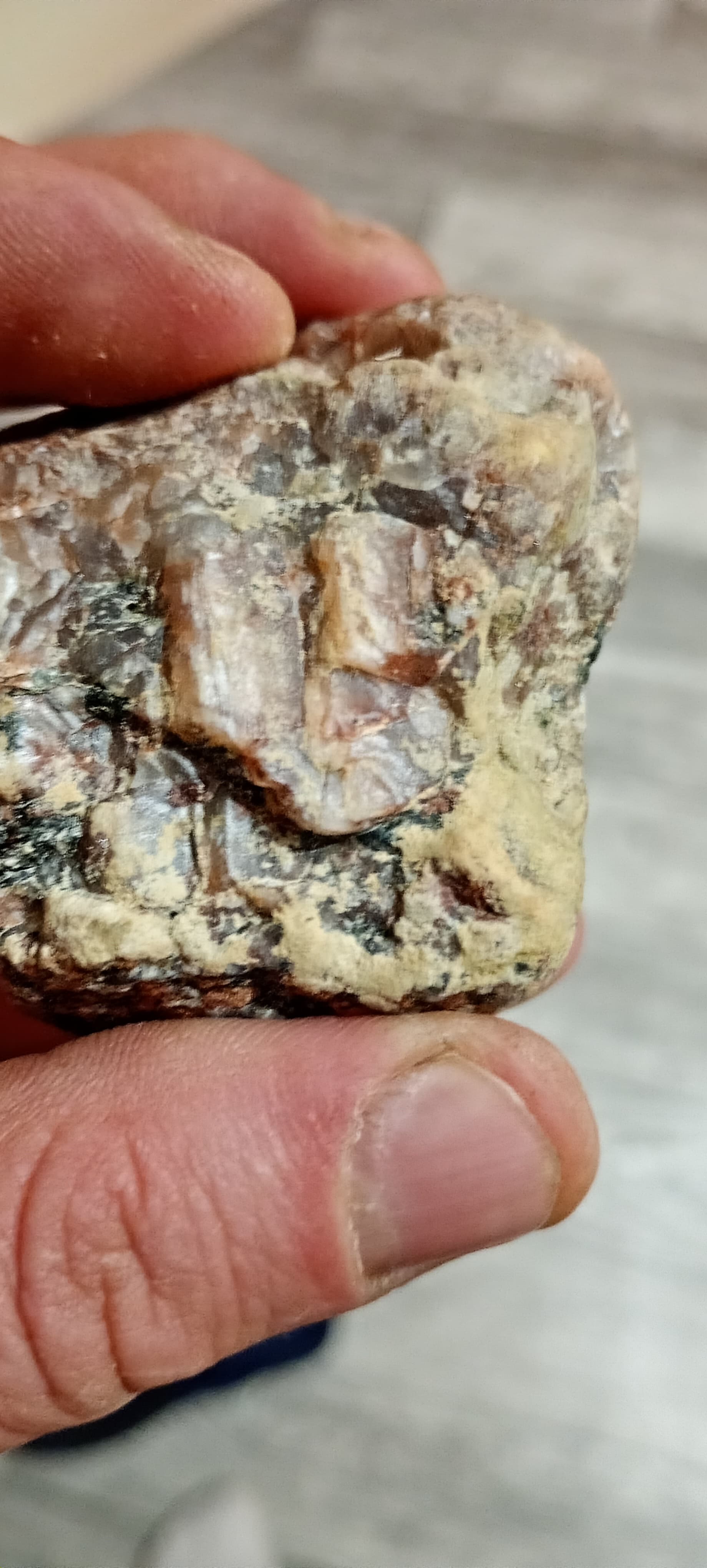
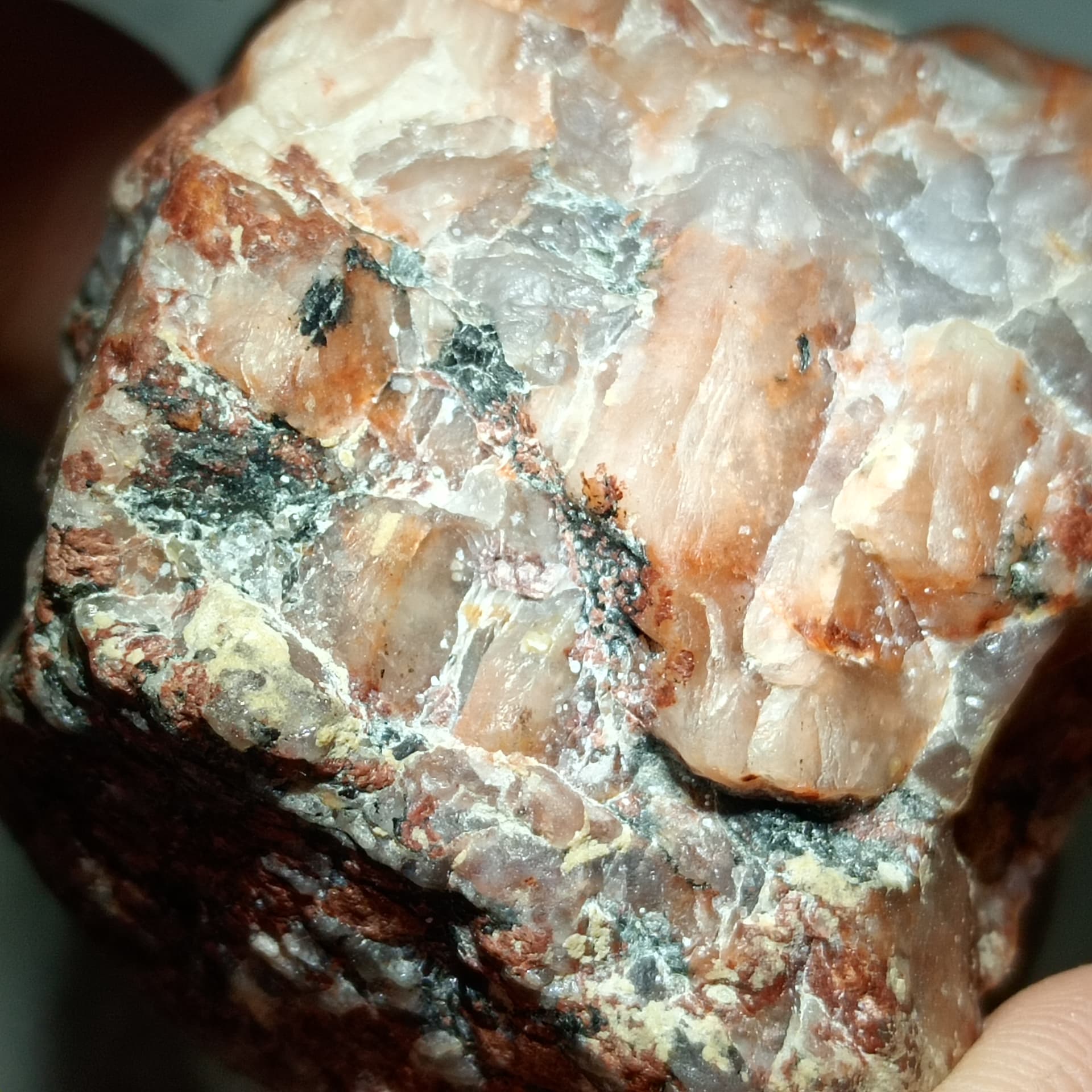
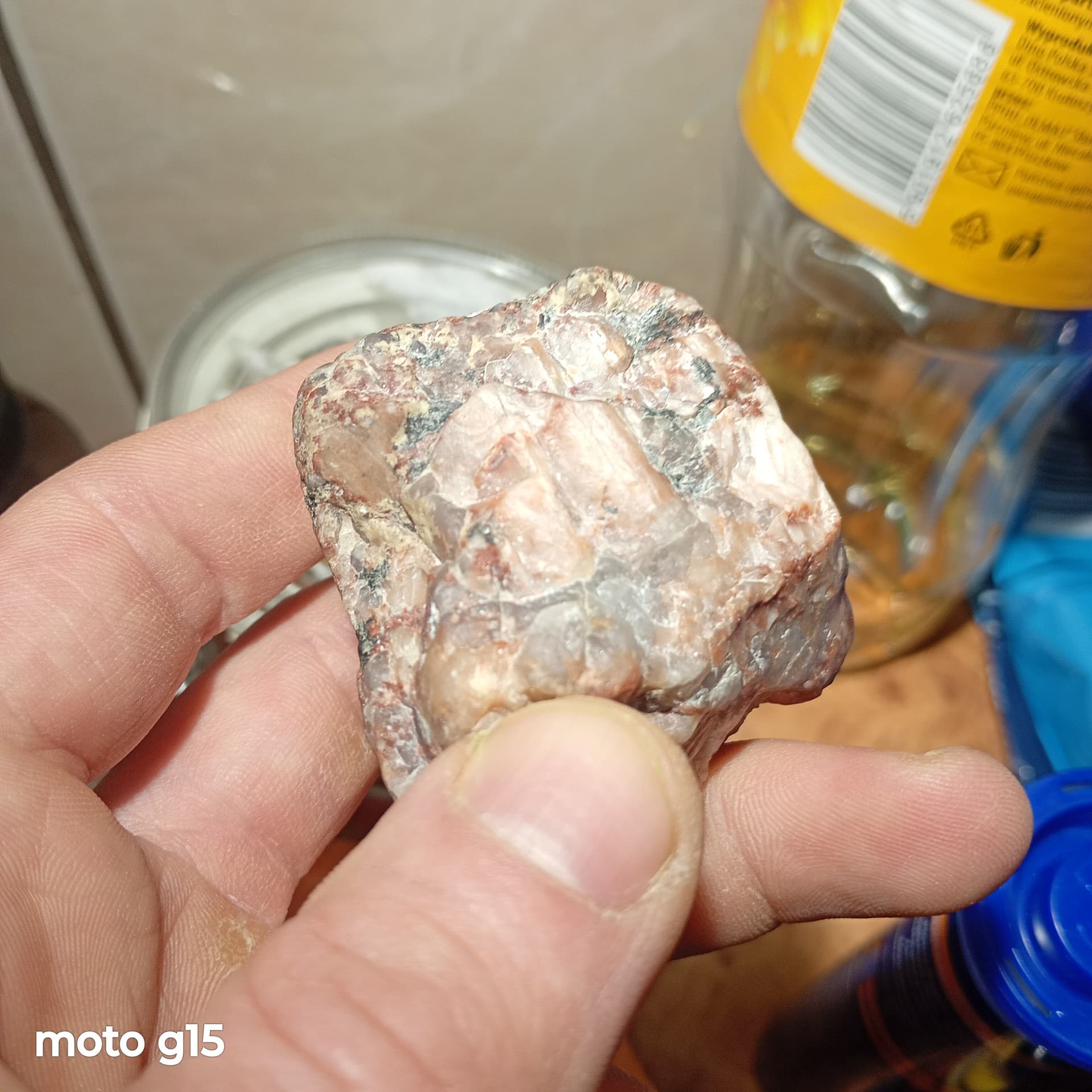
Hello, does anyone in the community recognize what this pegmatite sample might contain?
Here’s Short movie
Hello, does anyone in the community recognize what this pegmatite sample might contain?
Here’s Short movie
The pink flash is feldspar.
I also see quartz. And the darker bits might be mica.
Where did it come from? did it come from a locality where gem pegmatites are found? By far most pegmatites are “barren”… they are not enriched in incompatible elements that do not fit well into the crystal stucture of most common minerals found in granites nor in igneous differentiated rocks. All granitic pegmatites (a generality with exceptions) contain alkali feldspar (K bearing) which is light pink in color due to trace amounts of iron, albite feldspar, quartz and mica- muscovite with accessory blotite as the dark ferromagnesian mineral. These pegmatites are simply very coarse grained granites and granitotids. Pegmatites with gem potential concentrate incompatible elements- those that do not fit within the cystal structure of the common pegmatite minerals. light elements such as Li, Be, B, F are concentrated. large ion lithophile elements (LILE), Rb, Cs as well as large ion light elements and High Field Strength Elements (HFSE) such as Niobium and Tantalum are also concentrated, These “fertile” pematites are few in number and depend on provenance. Continental collisions starting at 1-2 billion years ago generate high to medium grade pressure and medium temperature metamorphic terrains. Hydrothermal fluid circulation leaches out incompatible elements out of billions of tons of metamorphic rock.. (Maine, North Carolina, Connecticut- east coast pegmatites). They also create orogenic gold deposits. The most recent continental collision starting about 50 million years ago, created the Himalayan montain chain, which extends into Afganistan. A variety of rocks were metamorphosed, some leading to gem pegmatites with hydrothermal fluid circulation.. The leucogranites of the high Himalayas do have deposits of tourmalines, rare elements- Nb, Ta…
Igneous pegmatities are of a different tectonic regimen- subduction zones, (southern California) and a few anorogenic granites (northrn Nigeria) (estern Canada) slow cooling allows for a high degree of fractional crystalization which in turn concentrates incompatible elements. Residual hydrothermal fluid circulation can create gemstones. The presence of schorl tourmaline can be a marker of more valuable pegmatite deposits. The most common gem minerals in pegmatites of metamorphic origin are beryl, tourmaline, amblygonite, spdumene. Lithium mica- lepidolite is another marker of granitic gem pegmatics or metamorphic origin.
Igneous pegmatites come in a variety of types depending on the parental magma- alkalic versus cal-akaline. Mafic pegmatites do exist also but do not concentrate incompatible elements. Tin granites from igneous differentiation contain topaz, There are some many different settings for pegmatites to form, it’s not possible to list all of them within a short discussion.
Your pegmatite is probably barren as most are. Knowing the provenance of any gem or rock is the first step in exploring the geology. The geology is key to every single rock. Knowing geology is essential. Geochemistry studies isotopes and trace element ratios and is far too advanced for most amateurs, no matter how well self educated they are.(I am an amateur also)..but geochemical segregation of the elements is the best way to know about the history of the earth and about deposits of all minerals both gemstones and strategic metals.