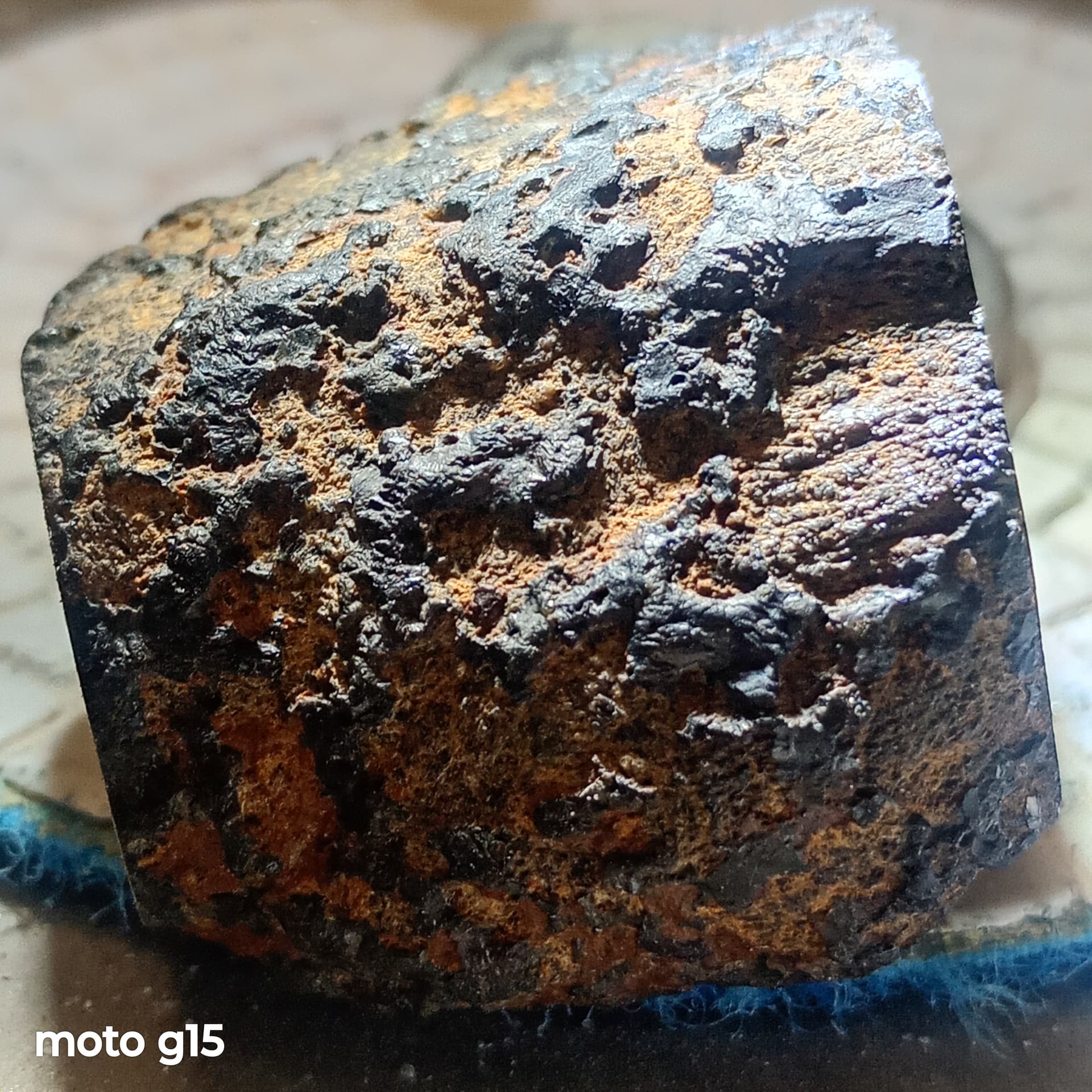
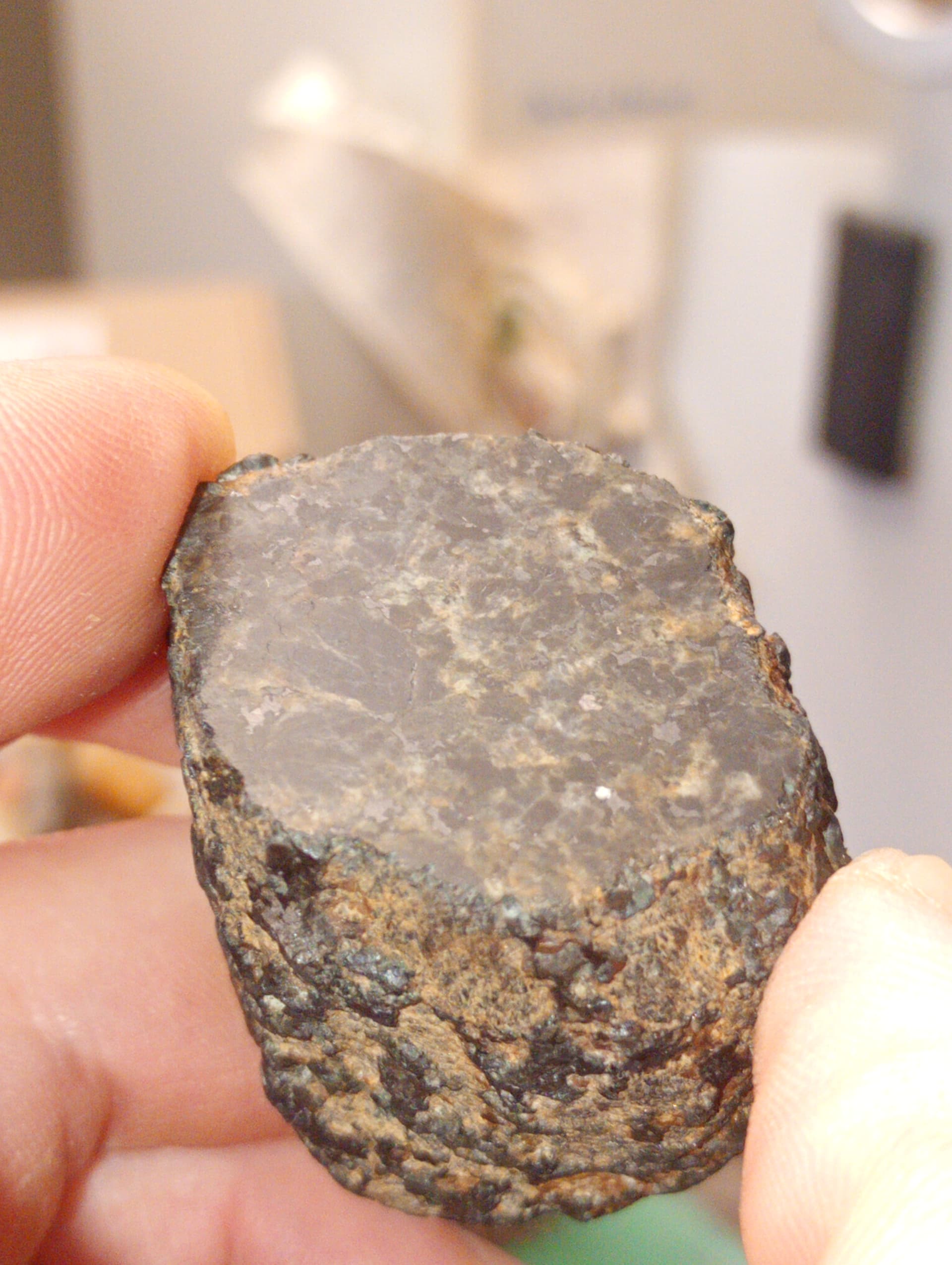
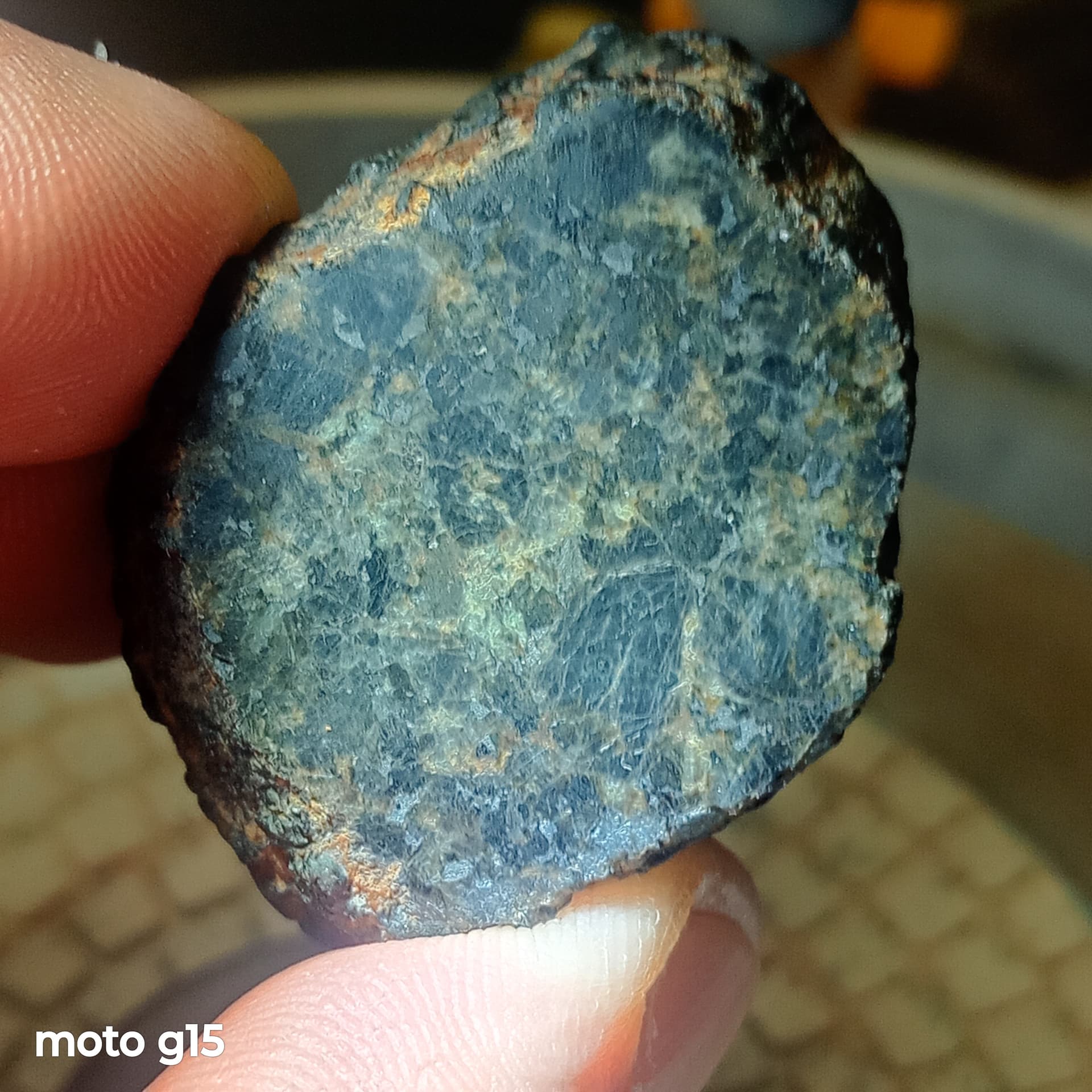
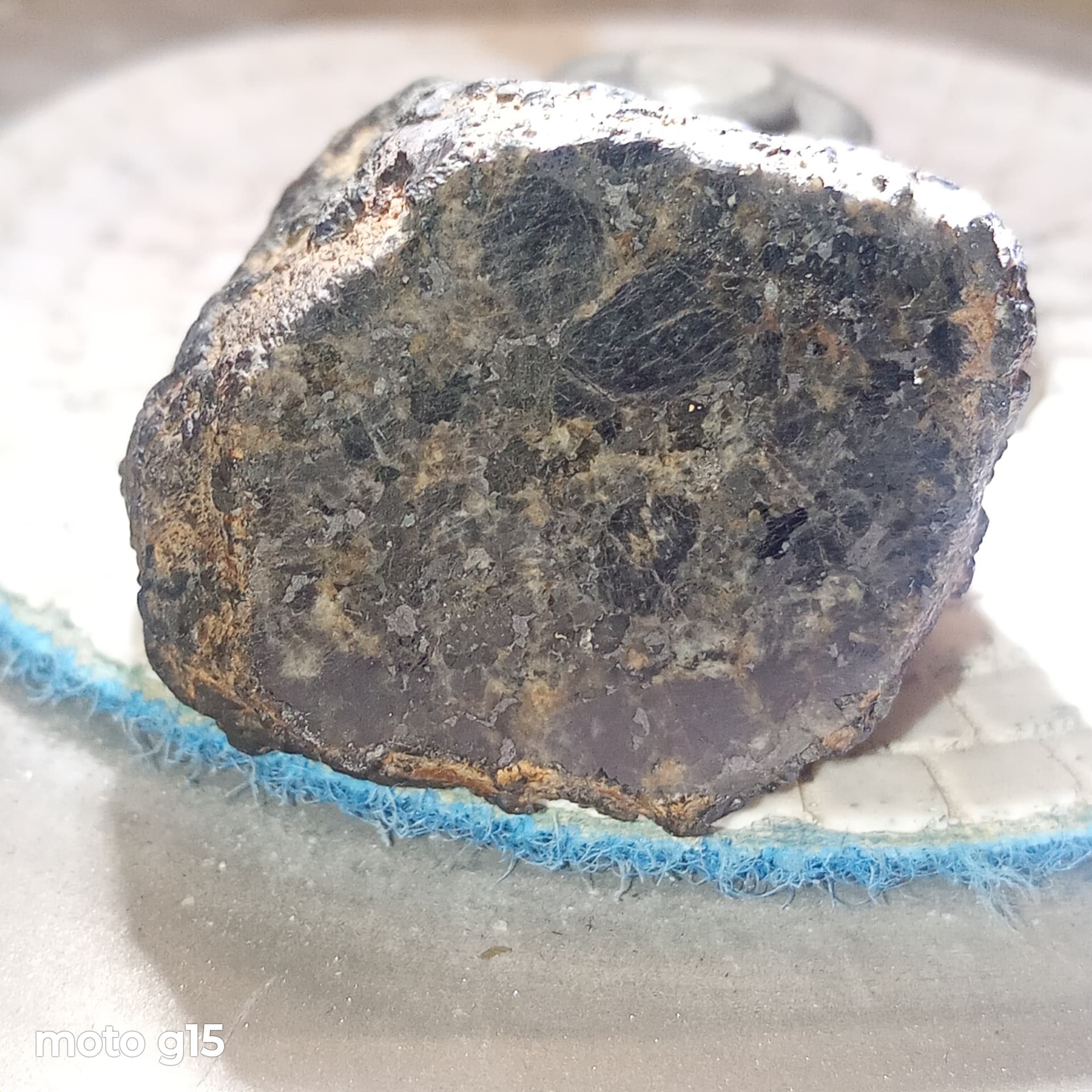
Hello, I am still waiting. I contacted a university employee who undertook to examine my rock. He is a lecturer at this university. Unfortunately, I have to wait a little longer because he is very busy with student exams and renovating his apartment in his private life. He says that the sample is ready, but he needs to find time to examine it again using Raman spectroscopy and a scanning microscope. I am also impatient. Of course, I will share all the documentation with the results here. I also found a company that cuts materials with a water jet. This week, I will make an appointment to have the slices cut. I am posting photos as a reminder. Best regards and thank you for your interest.
1 Like
Hi Maciej,
You mentioned back in November, that you did some initial cleaning of the stone.
I am curious about what you meant by that. Did the crustal conglomerate crumble away with little effort or did it have stronger adhesion?
There is an interesting feature in one of the images you just posted where a jagged cavity is present between the crust and interior mass. If this specimen has a volcanic origin, this melt boundary would normally be less angular and more rounded.
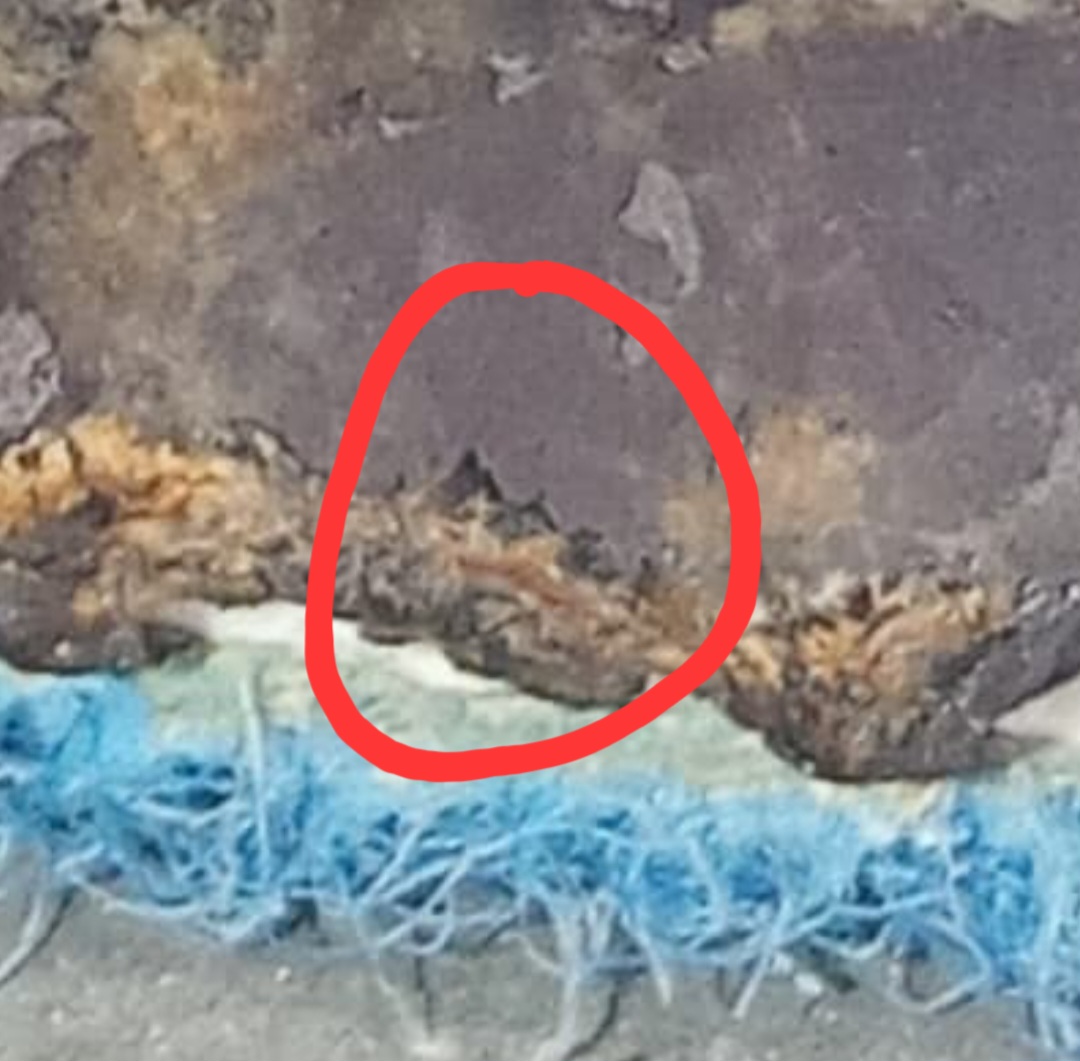
This looks similar to a thermal shock event where angular cleavage planes are generated from a rapid thermal change.
-Troy
1 Like
Hi Troy, before cleaning, the sand on it was so firmly stuck that rinsing with water didn’t help much. Actually, I was interested in it because of its surface structure and sparkle in the sunlight. I won’t hide the fact that I used an aluminum wheel cleaner that contains SODIUM THIOGLYCOLATE and active ingredients that are not listed on the packaging. The dirt turned red to purple after about 10 minutes, and then I just rinsed it with hot water, and since then it has looked like the photos I shared. The region where it was found is the Mazovian Lowland, where most of the area is covered by forests, farmland, and meadows. If you want to know what it looks like, all the information is publicly available. I will not reveal the exact location because the owner of the land and his wife did not give their consent.
looks like lava rock. Magnetite will explain the sticking to a magnet. Kiruna type iron deposit, magmatic liquid immisicbility origin. Monterrey, Mexico another prototype for this kind of ERUPTED iron deposit.
please share the final results of the university analysis, when they are finally done… thank you..
1 Like
That would explain why the dirt turned red/purple, since thioglycolate reacts with iron oxides.
The Mazovian Lowlands have interesting sedimentary geologic history with glaciation. Not much information available discussing volcanic activity, so the specimen is definitely unique.

1 Like