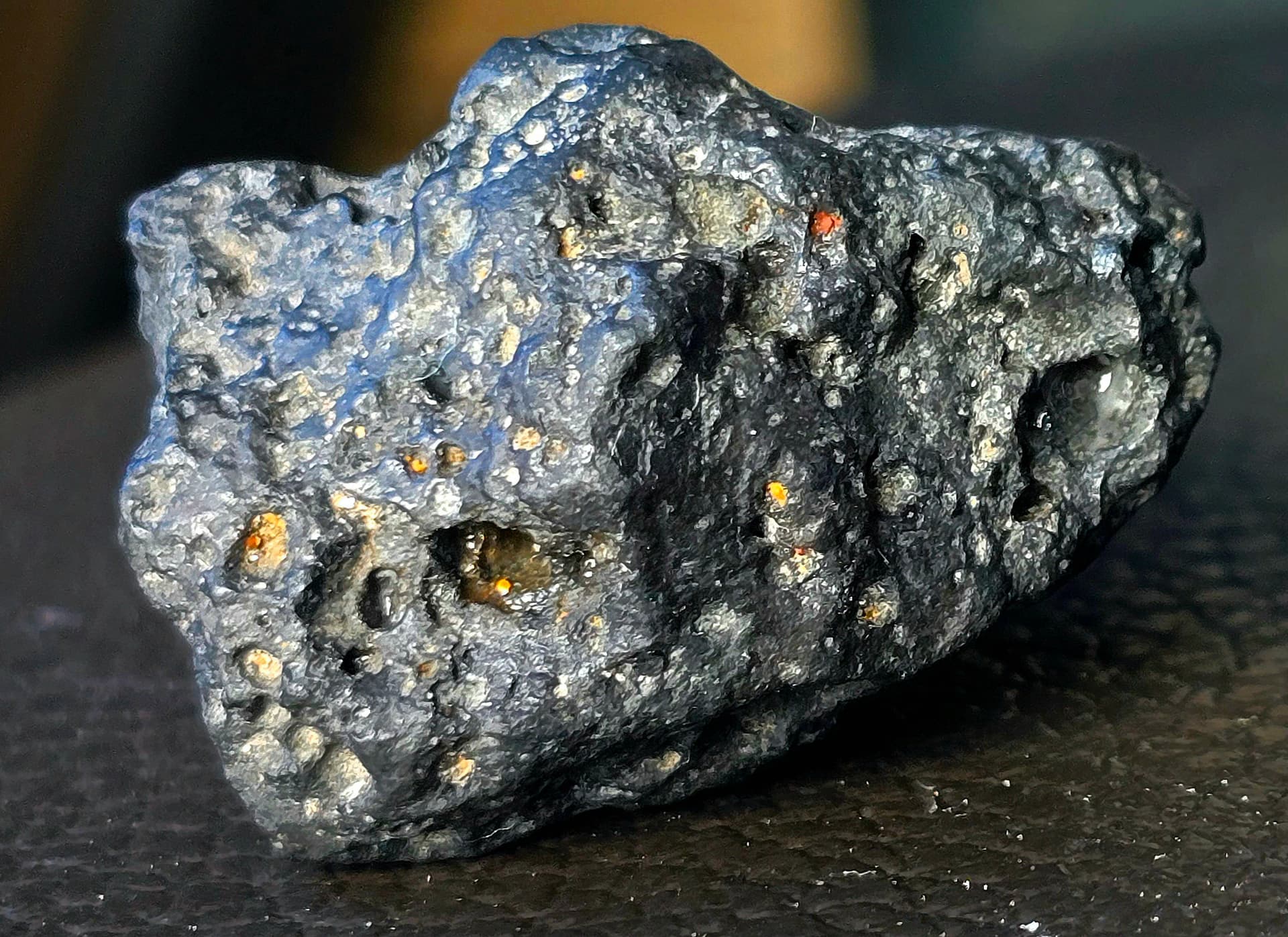
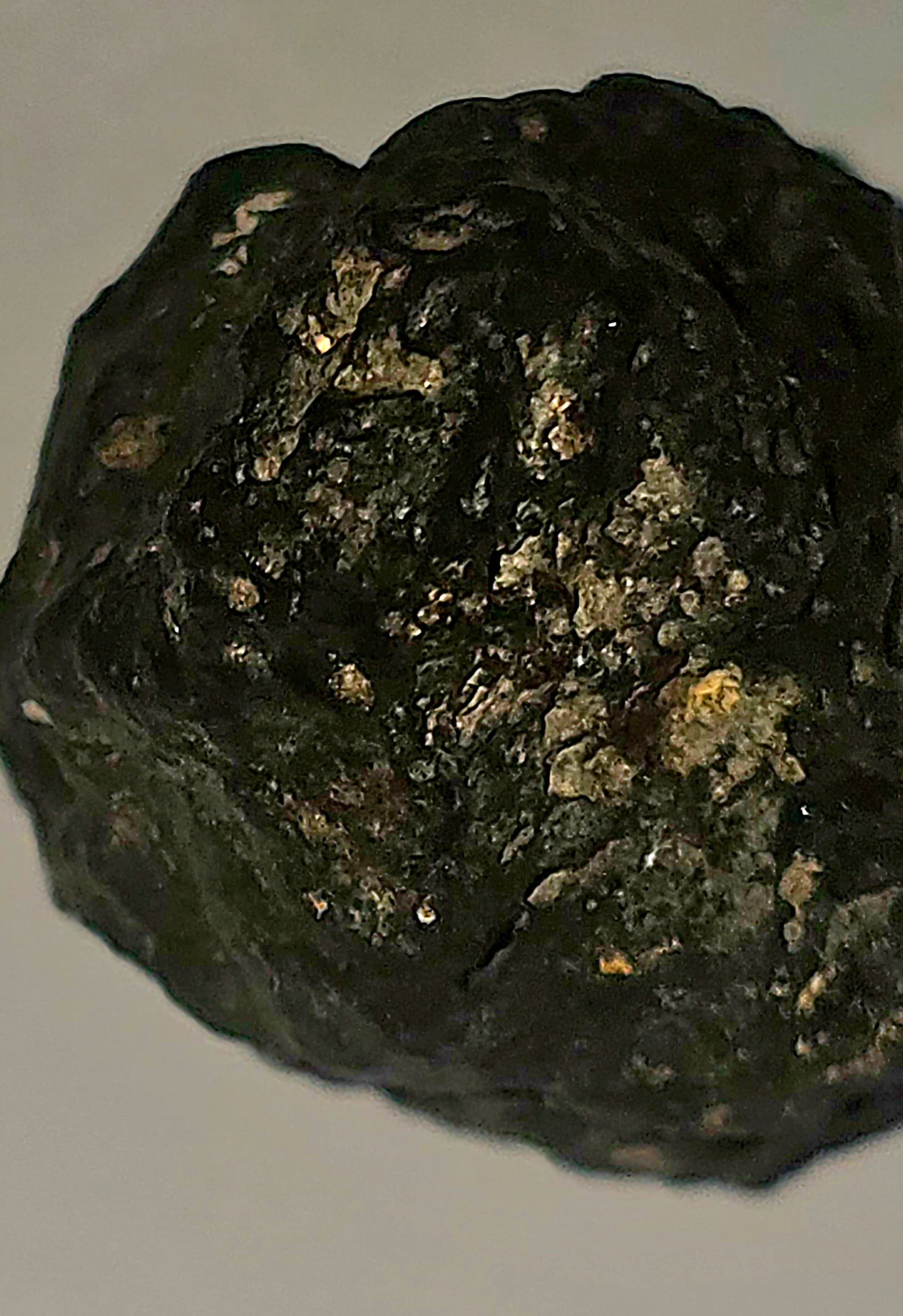
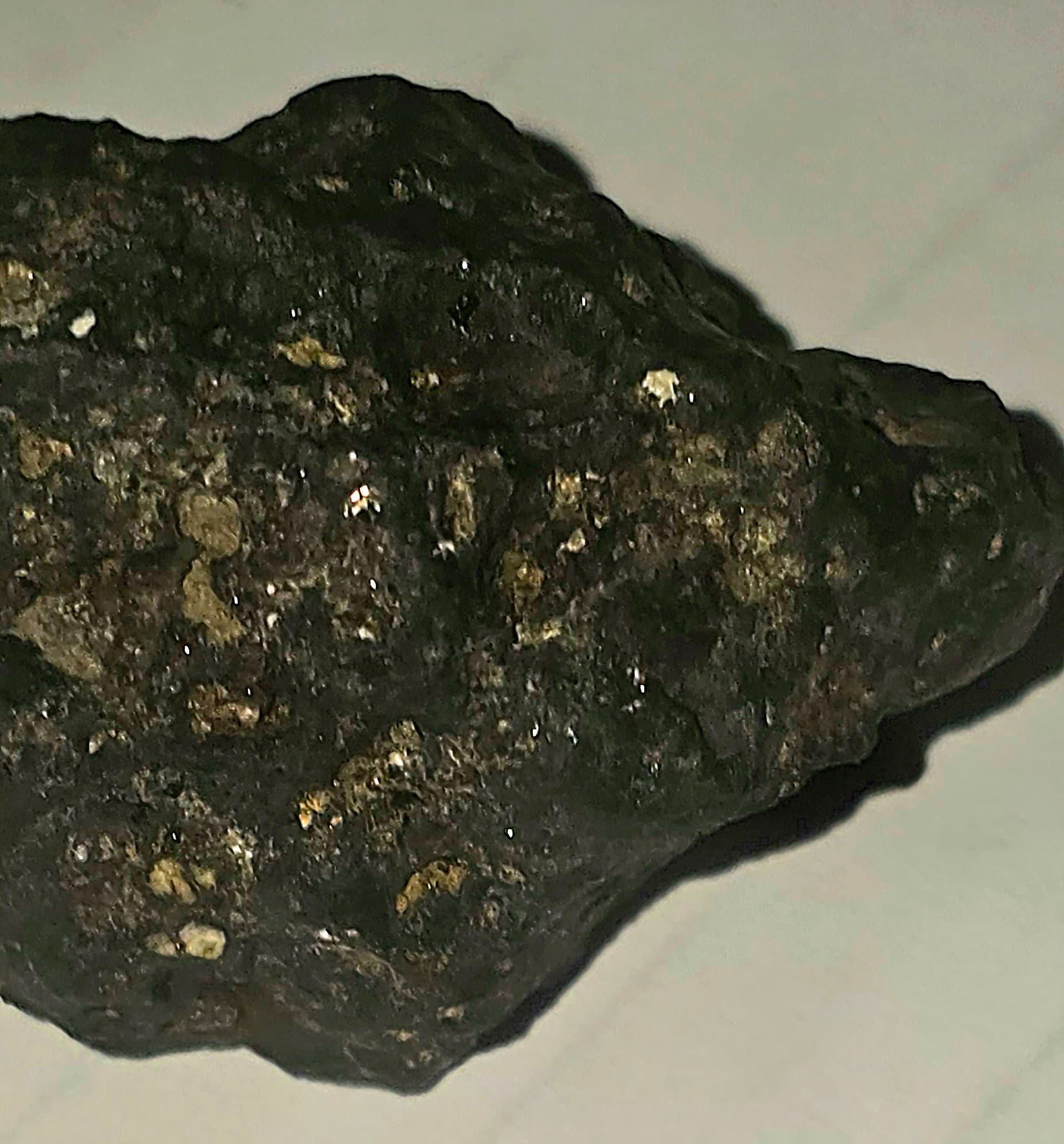
Found this thr other day it weighs 28.8grams density is 3.31 and magnet sticks and stays. U can see some of whatever type of metal it is under crust. Looks like it has very thin stacked and group lines with each group going in another direction.





Hi Michael,
The density doesn’t seem right for a meteor fragment that reacts to magnetic fields. The lines you mention… do they look like a cross-hatch weave or do they look like wax drip traces on the side of a candle?
Here are some links that may help provide clues to the origin and type:
Washington University in St. Louis
Several of these sites have people who can identify the nature of the stone for you.
Cheers!
2 Likes
The sample looks like what I recall seeing in slag piles next to an old old foundry I used to visit when I was younger.
2 Likes
Witajcie w mojej próbie zbadanej spektrometrem typowo jubilerskim XRF wykazało około 60 % pierwiasków lekkich oraz około 13% żelaza był też tytan coś około 4-5 % chyba też molibden i śladowe ilości cyrkonu i złota. Postaram się o dokładniejsze badanie i je tu opublikuje .
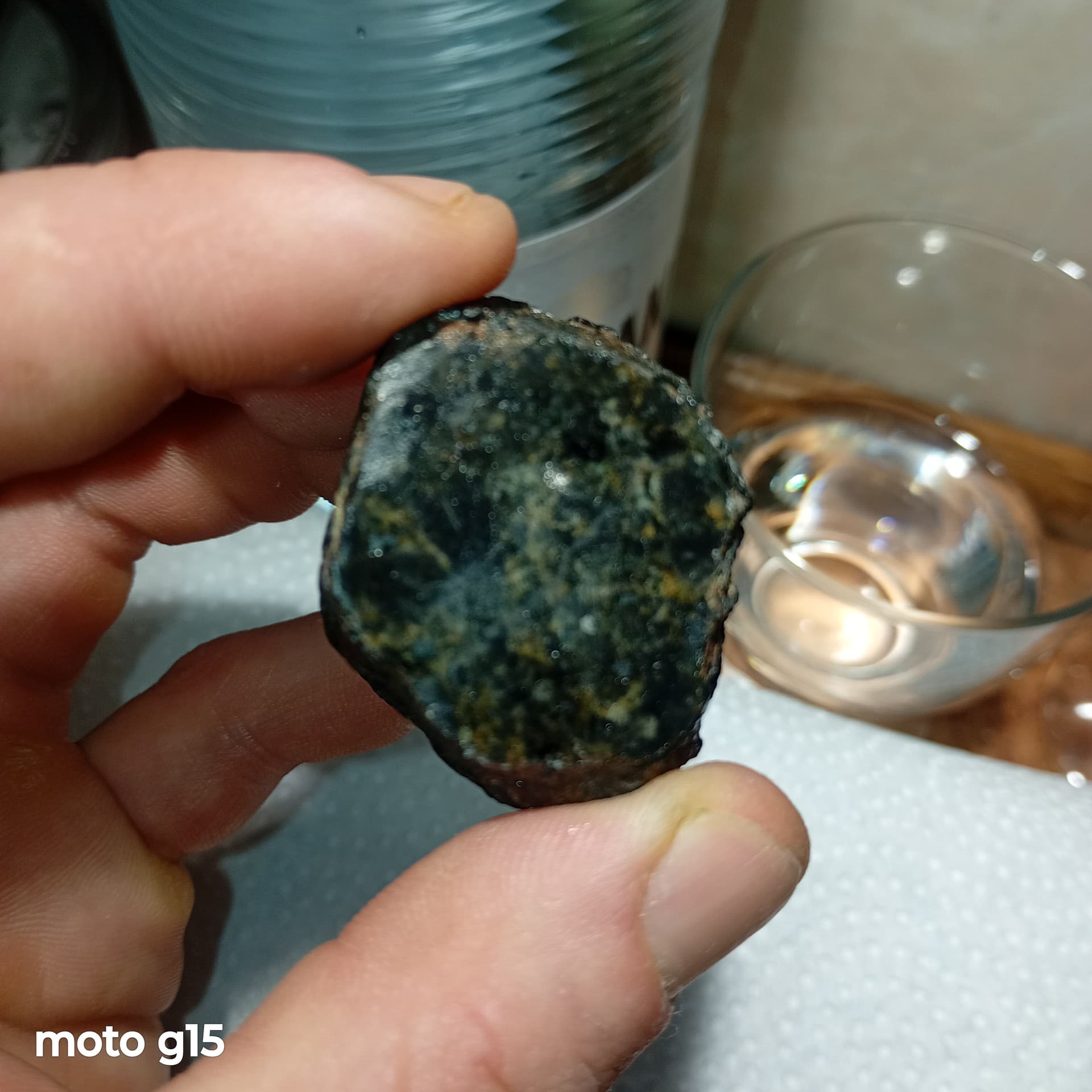
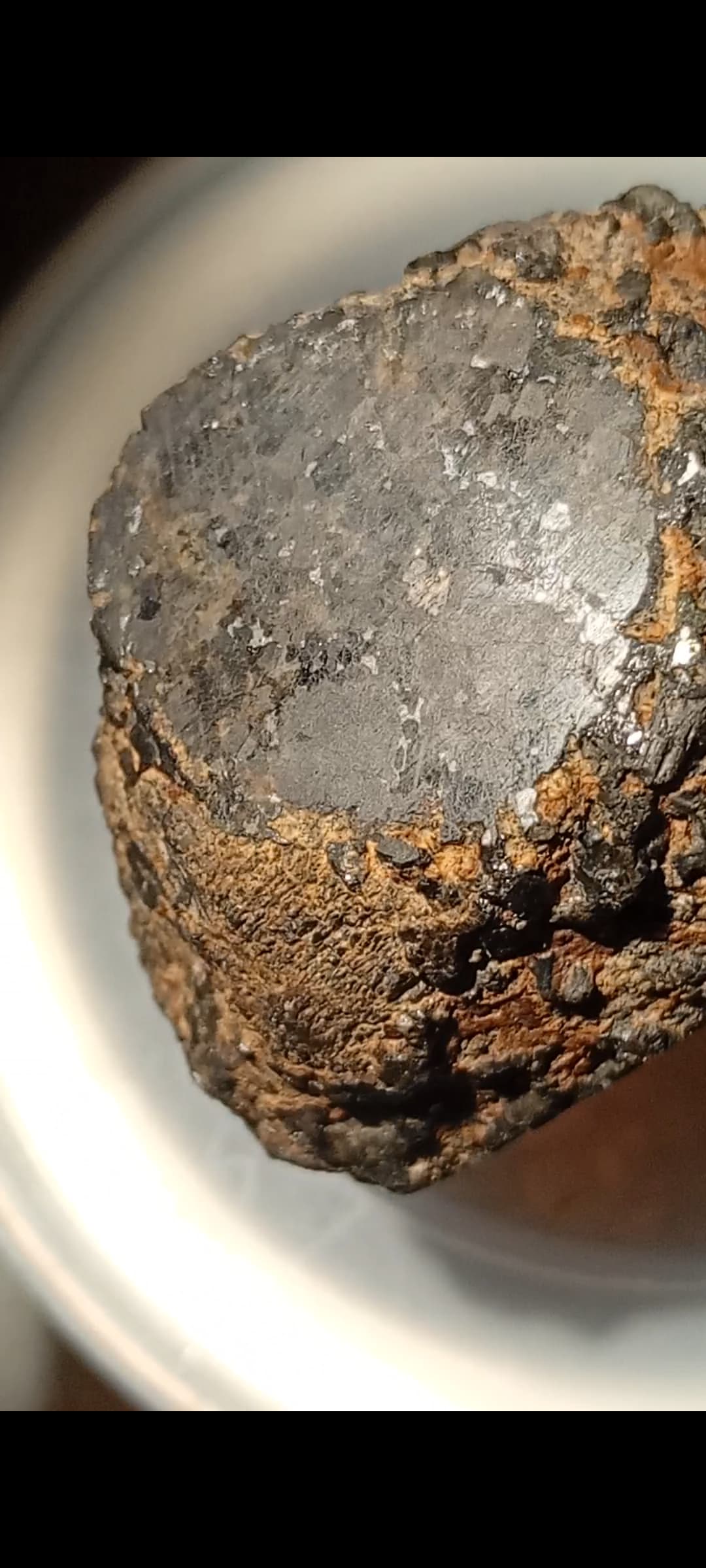
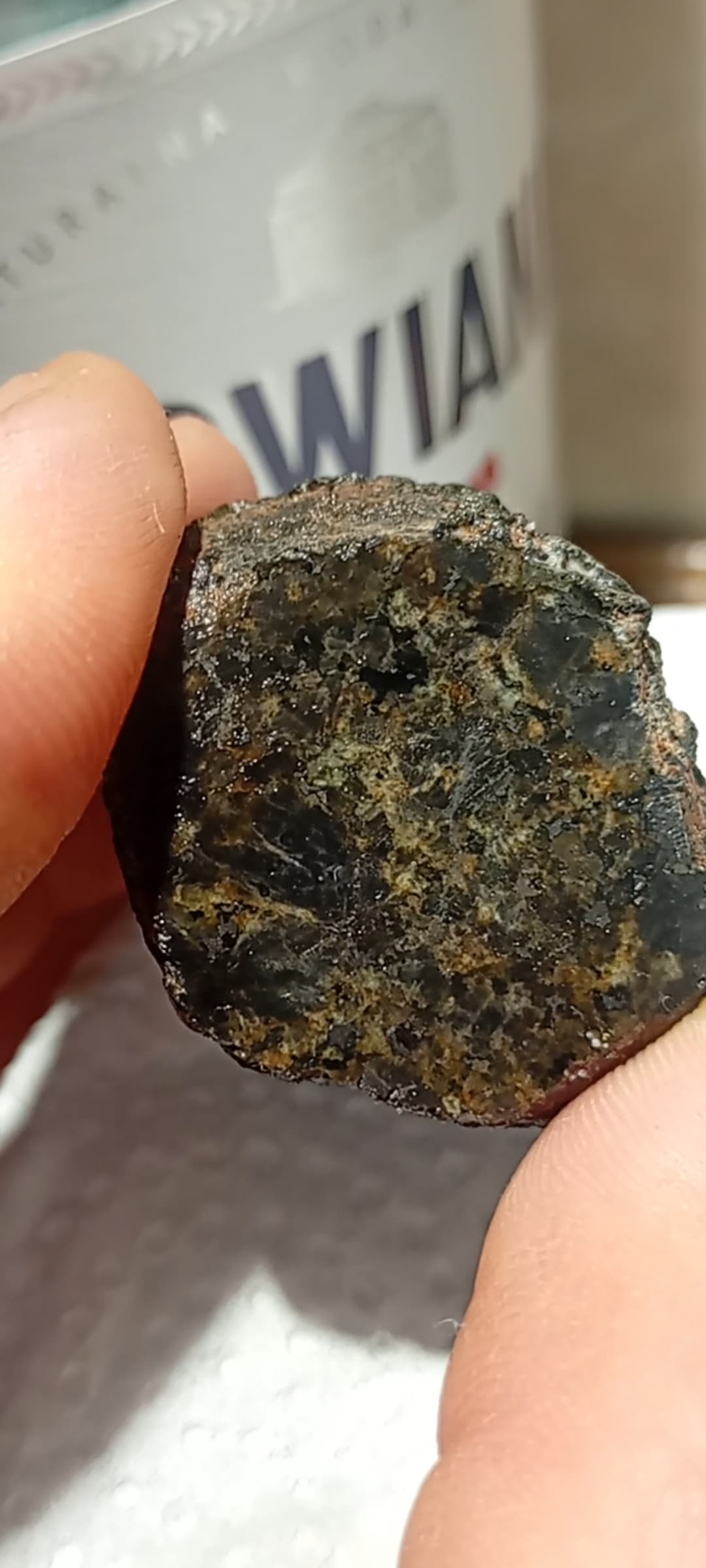
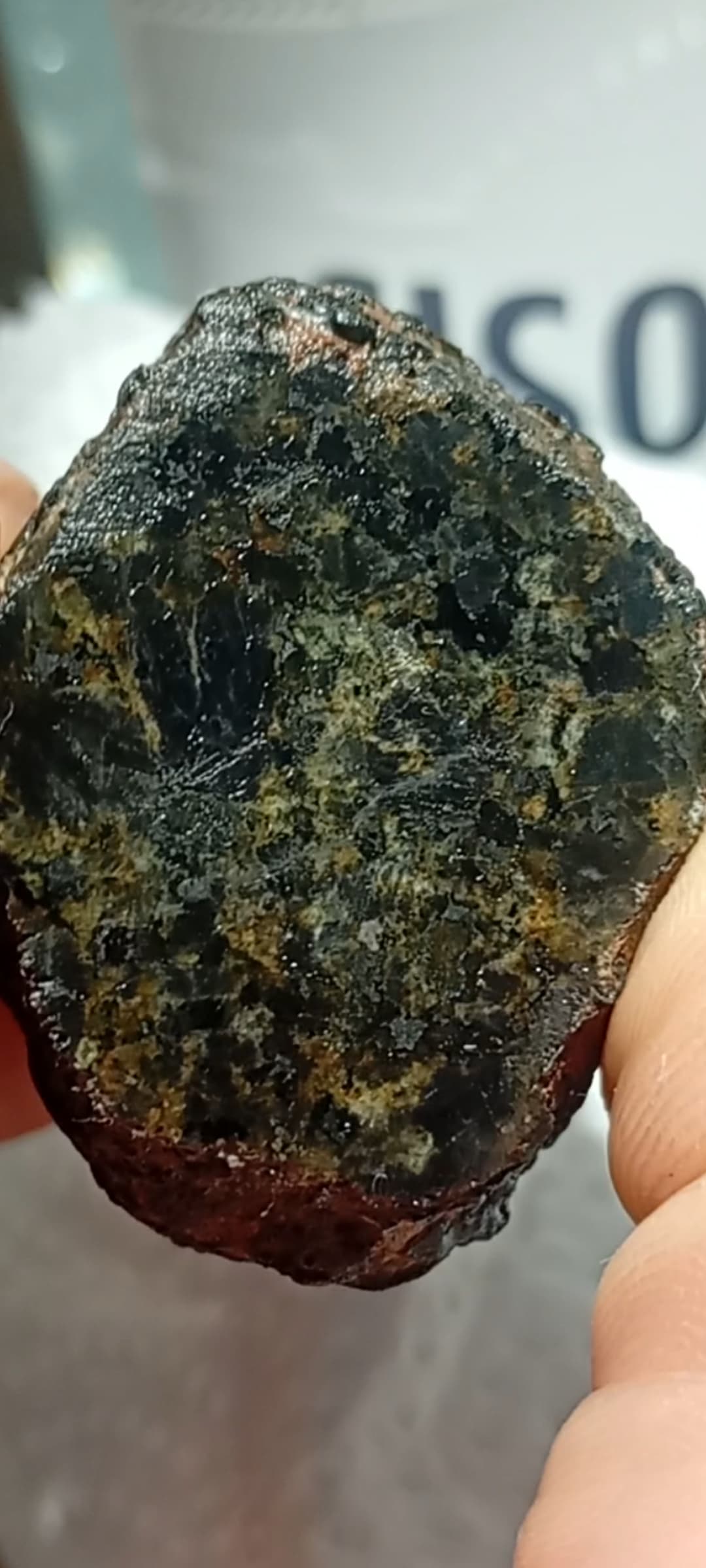
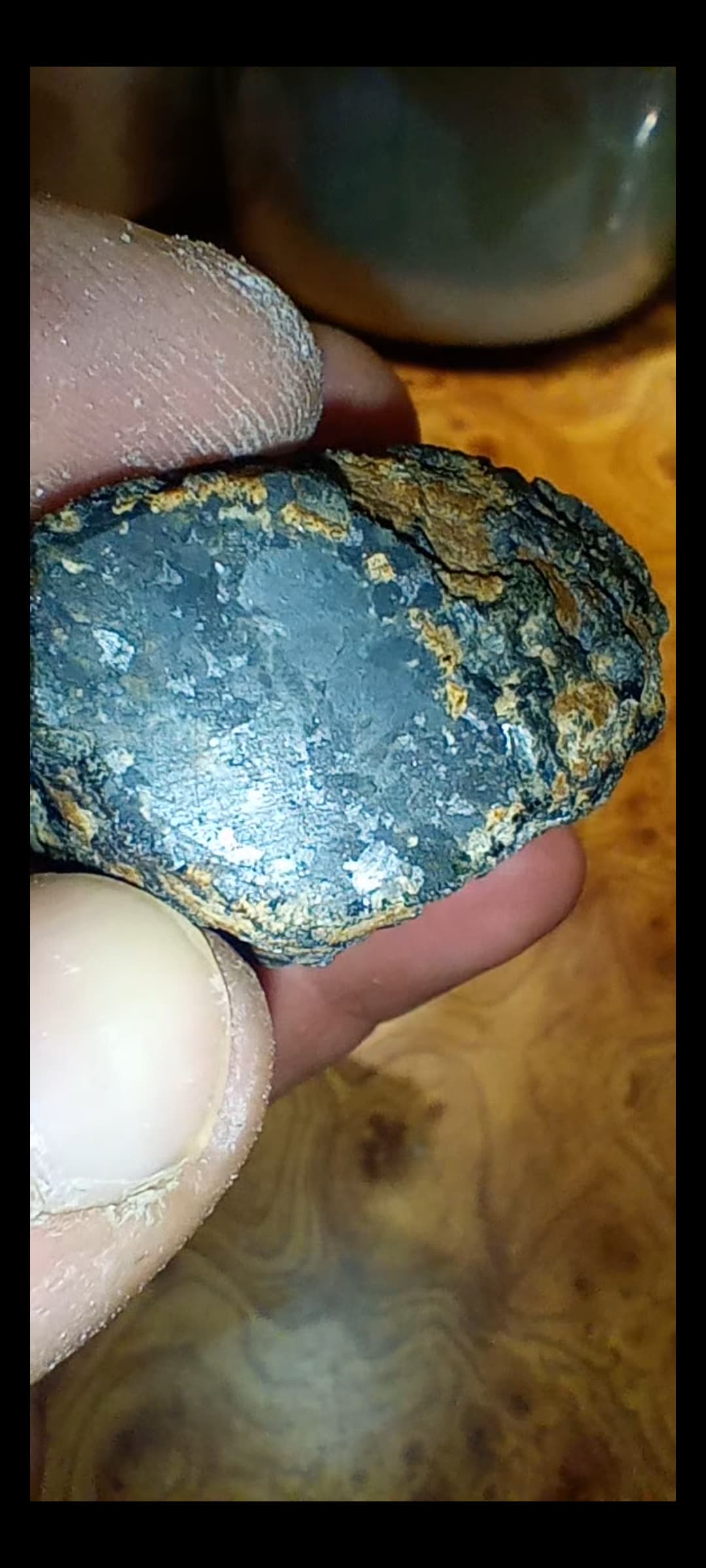
Hello, my sample, examined with a typical jewelry spectrometer, showed XRF (X-Ray Radio Frequency) spectrometer. It contained about 60% light elements and about 13% iron. There was also titanium, about 4-5%, probably molybdenum, and trace amounts of zirconium and gold. I’ll try to get a more detailed analysis and publish it here.
Hi Maciej,
Not sure the translation to English was 100% accurate but thank you! Would be very interested to see the detailed report! 
Cześć Maciej,
Nie jestem pewien, czy tłumaczenie na angielski było w 100% dokładne, ale dziękuję! Byłbym bardzo zainteresowany szczegółowym raportem!
Very difficult to tell from pictures. The density is too low for an iron nickle meteorite- about 7 or above. Achondrite silicate meteorites have a density of about 2.9 to 3.7…These are non magnetic. Urelites achondrites can be magnetic due to the presence of iron and still have a low specific gravity. Troilite is magnetic. These are very very very rare!… knowing where it came from is another good clue. As mentioned in a prior post, it looks like slag… it’s slag if it came from a slag pile. If it came from a flat field underlain by sediments and sedimentary rocks and was not water borne, it doesn’t belong there. recent volcanic rocks with gas pockets and a glassy exterior can have the same appearance.(less than ten thousand years old). When finding something out in the field, the geologic setting is everything. Please specify.. you can do that without disclosing the exact location.
It was found in a field 300 meters from the forest. My friend mentioned that he saw a falling meteor, but its larger parts must have fallen further away from our area0. I unnecessarily started cleaning it, and due to my lack of knowledge, the crust could have been removed, although a few years have passed since the fall, and it is difficult for him to even say what year it could have been, probably between 2018 and 2020. We live in Poland, in the Mazowieckie Province. There have been many documented crashes here, but none of the ones that were found were similar to this one. It is definitely not slag from some embankment, as it strongly attracts ordinary magnesium. I decided to prepare a petrographic sample for examination under a microscope and to determine its chemical composition. I am waiting for information from the institute. Best regards
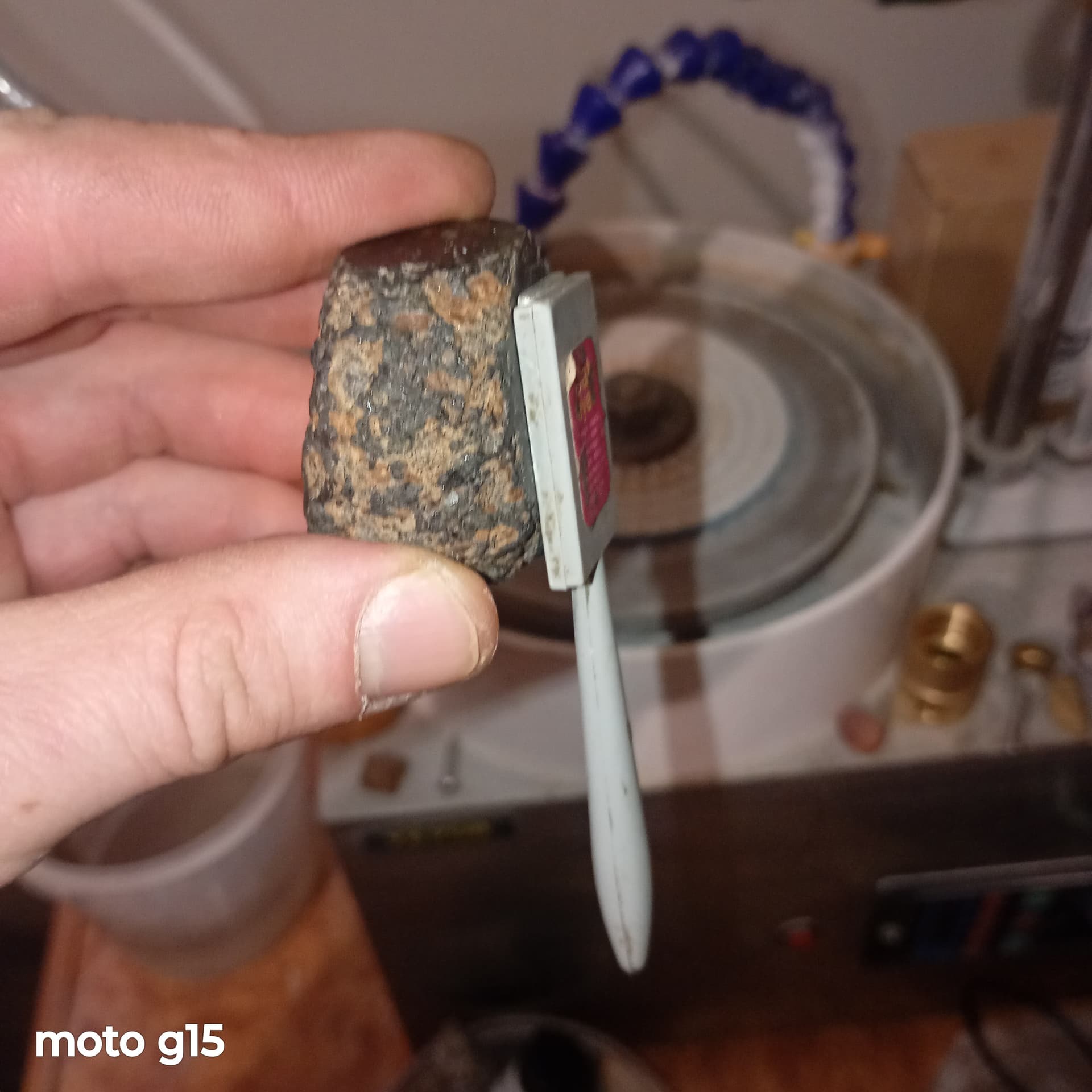
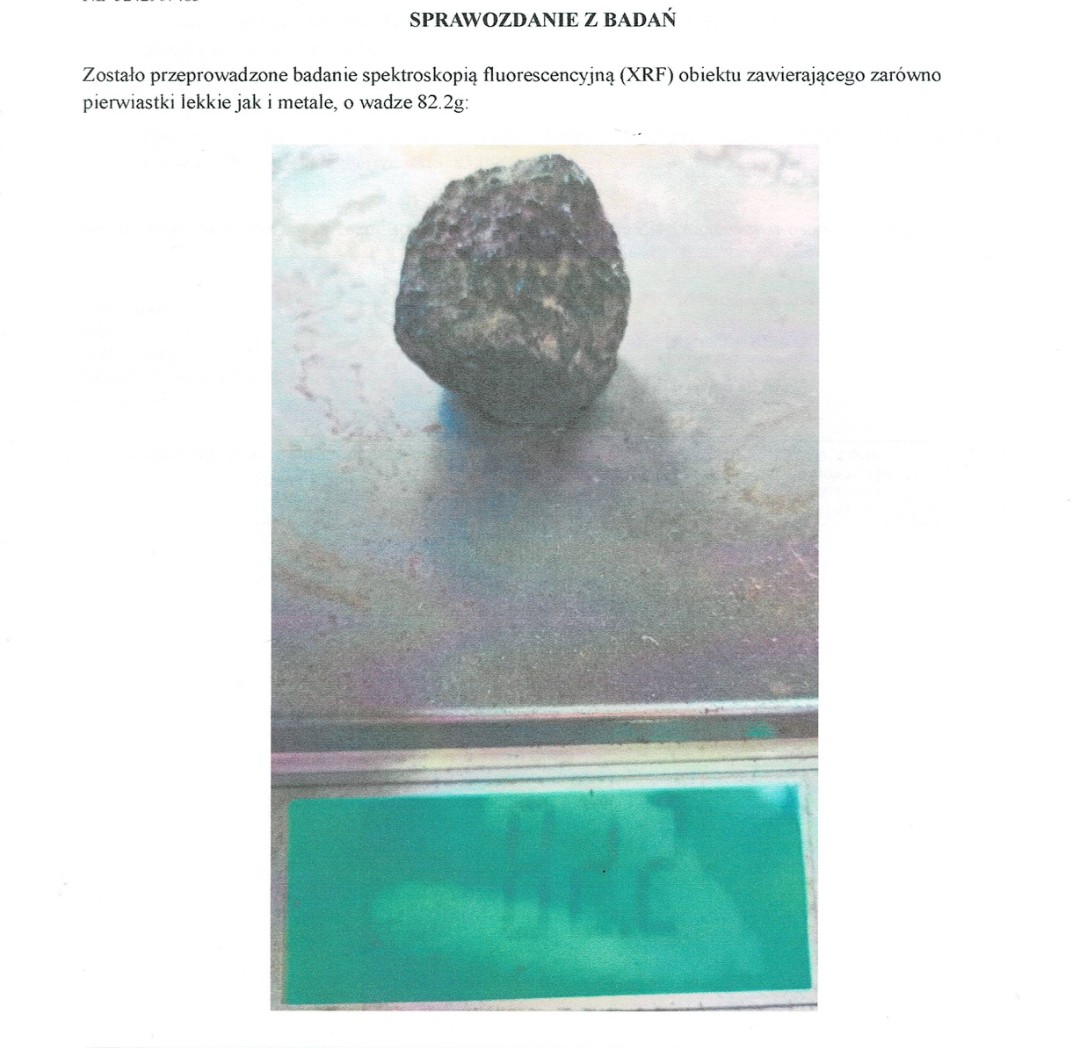
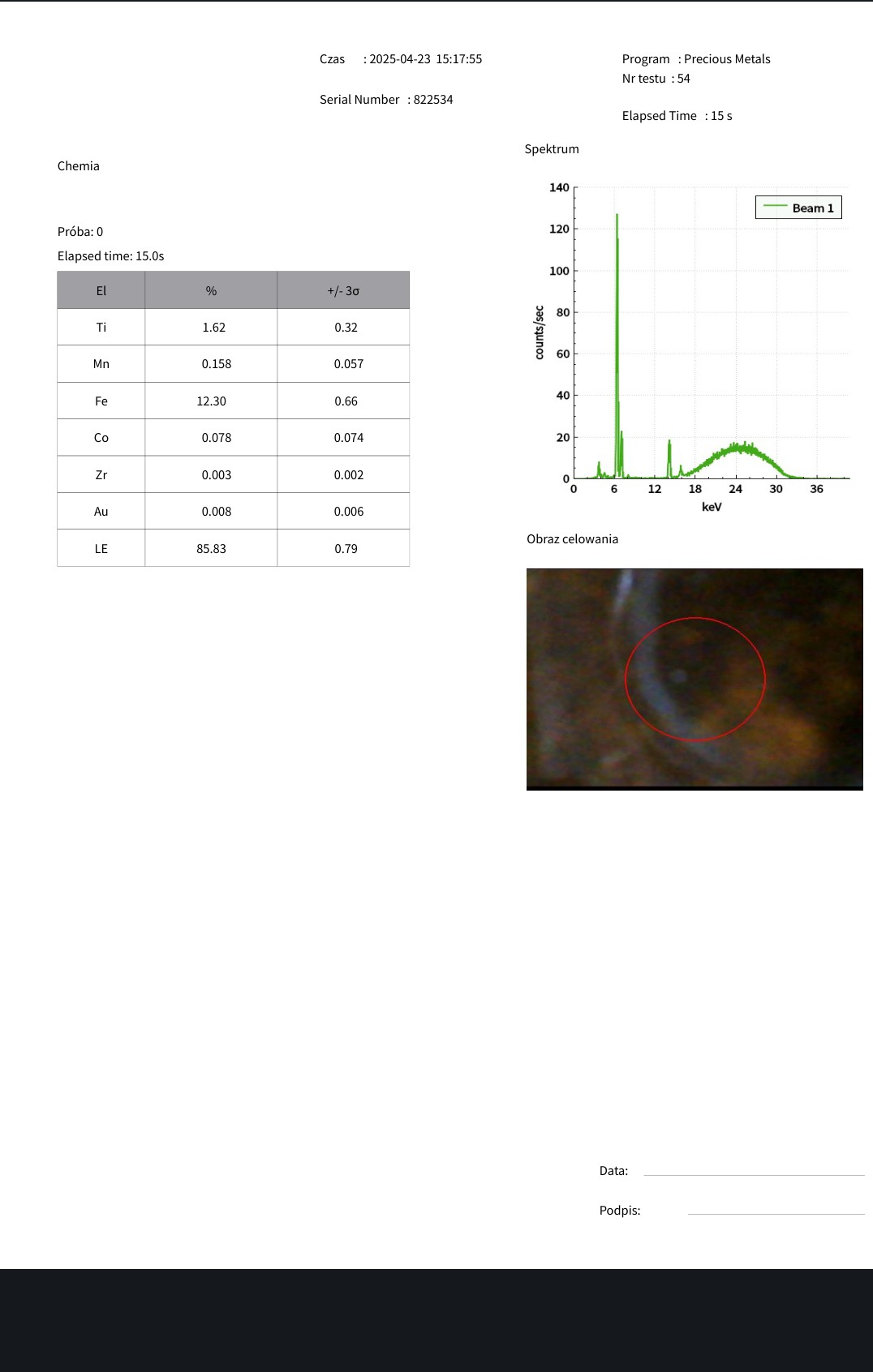
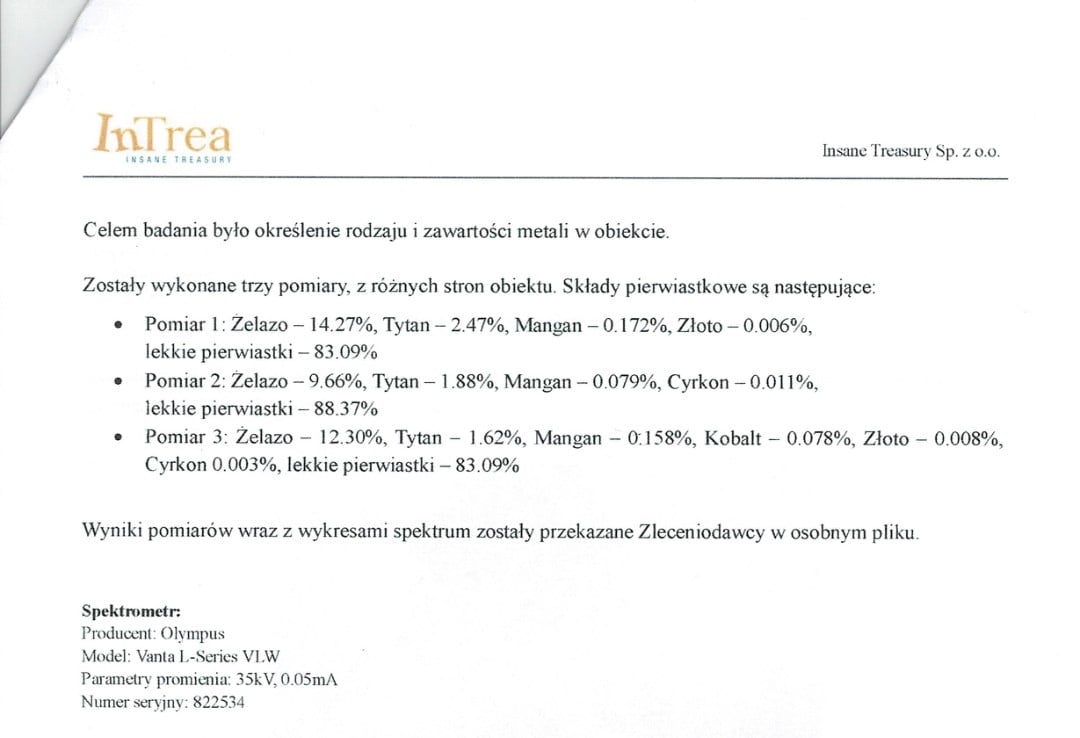
I managed to find the report from this study. I made a slight mistake regarding the percentages, for which I apologize, and there was no molybdenum, only manganese. Spectrometer:
Manufacturer: Olympus
Model: Vanta L-Series VLW
Beam parameters: 35kV, 0.05mA
Serial number: 822534
Macie,
Thank you for the XRF report data. It was very helpful to know what instrument was used.
Found the user manual here: Vanta L-Series VLW User Manual
Unfortunately, the L-series XRF analyzer cannot distinguish elements below Titanium (Ti). This means important elements like; Al, Si, Ca, and O cannot be sampled individually and are collectively placed in the “Lite Element” (LE) category. It is not clear to me how the instrument can determine the “unclassified” or unmeasurable mass percentage, if it cannot determine individual element ratios. Pretty sure there is literature in the science/engineering world that explains this… but it is not readily accessible. At least from what I have found so far. 
Per the author of the article below, hand-held XRF instruments cannot provide sufficient data to classify a “stony” meteorite candidate. (Second paragraph)
The charts in the article are interesting. The element ratios for your specimen seem to be outside the normal distribution range of any of the Chondrite or sub-chondrite varieties.
The limitations of the hand-held XRF instrument is unfortunately generating inconclusive evidence, because it cannot provide SiO, AlO, and CaO ratios.
So, my observations and comparison of what is provided, is speculative.
The Lunar and Planetary Institute has some good references to look at as well.
Wish I had better news for you.
Cheers!
-Troy
Hi, the thing is that he had limited software for this device. Because he didn’t do gemological or geological research. This man was simply willing to help and happened to have such equipment in his workshop. He extracted precious metals from car catalytic converters and diagnosed their content. For me, too, this test was not detailed enough. He warned me that he was focused exclusively on metals, and I mentioned this in my message above. I am waiting for the petrographic results from the institute. I think they will be available within a week. As far as I am concerned, it is a strange rock that does not really fit in with the environment in which I found it. If it is an earthly rock, it looks like a deep-sea rock. I may be wrong… Thanks for info . 
Plain achondrite meteorites have a similar overall chemical compositions as mafic terrestrial rocks. Oceanic basalts and mantle- peridotities, pyroxenites. HIgh Fe, hi Mg, with olivine, plagioclase, and pyroxene. The internal structure is crystalline..If it was found in an area without mafic volcanic rocks, and lying on the surface, it could well be an achondrite stony meteorite. If you have already prepared a thin section petrographic sample, the mineral content can be identified by light microscopy by a trained petrologist. Achondrites are the most difficult to distinguish from mafic terrestrial rocks. The presence of small amount metallic iron/nickel alloy, troilite sulfide is a another disinguishing characteristic of achondrites that can separate them from terrestrial mafic rocks.
1 Like
Hello, I am still waiting for information from the Geological Institute of the University of Warsaw. I have just sent a message with a query. On Research Gate, I read that it is best to test for the presence of isotopes from a freshly cut piece. I will definitely not abandon the subject of this rock. Perhaps it also contains microscopic diamonds; I found such information there as well.Is there a chance that it could be a Martian rock?
1 Like
Fresh surfaces are better for every kind of analysis. Please let all of us know what the University of Warsaw finds about your rock.
1 Like
Thank you, Steven, for your opinion. I have one more question about cutting such achondrites. What method can be used to cut them with the least possible loss of sample mass?
use a thin blade diamond wheel, a trim saw if the sample is small. Using a trim saw by hand may break of a slice unevenly. If the meteorite can be clamped in a slab saw, use the thinnest trim saw blade available if the blades are interchangeable. Try to take the thinnest slice without breaking the slice. Thin sections for microscopic examination will have to be made with specialized equipment at the University. Ask them first before you cut your meteorite what kind of thin slab they need. A better option may be to ask the university to do it themselves without taking off much material from the sample. I would talk to the university people first as how to proceed before doing anything with it yourself.
2 Likes
probably not a martian rock. 0.5% of all meteorites come from mars. Only geochemical studies, such as oxygen isotope ratios, other gases in the atmosphere of mars, can identify martian rocks. That will require LA-ICP-MS.. laser ablation inductively coupled plasma mass spectrometry….dating by radiodecay isotopes show that martian meteorites are much younger than asteroid belt meteorites. U/Pb, Pb/Pb isotopic ratios can be used for dating. K/Ar dates can also be obtained, depending on the mineral grain sample. again this will require mass spectometry. These are two distinquishing characteristcs of martian versus asteroid belt meteorites. The geology lab at the university should have the equipment.
2 Likes
Please let us know what the university of warsaw finds out about your rock. All of us are very interested in knowing the results. If it is a meteorite, it’s value is far more than a collector’s item.. Any slice of the sample given to the universty would add to our knowledge of the solar system and the formation of the earth itself…Good luck and good hunting.
2 Likes