Hello everyone,
I am new here but wanted to introduce myself, I used to collect gemstones years ago with a focus on Opals but had to sell my collection in the divorce sadly and am slowly getting back into things.
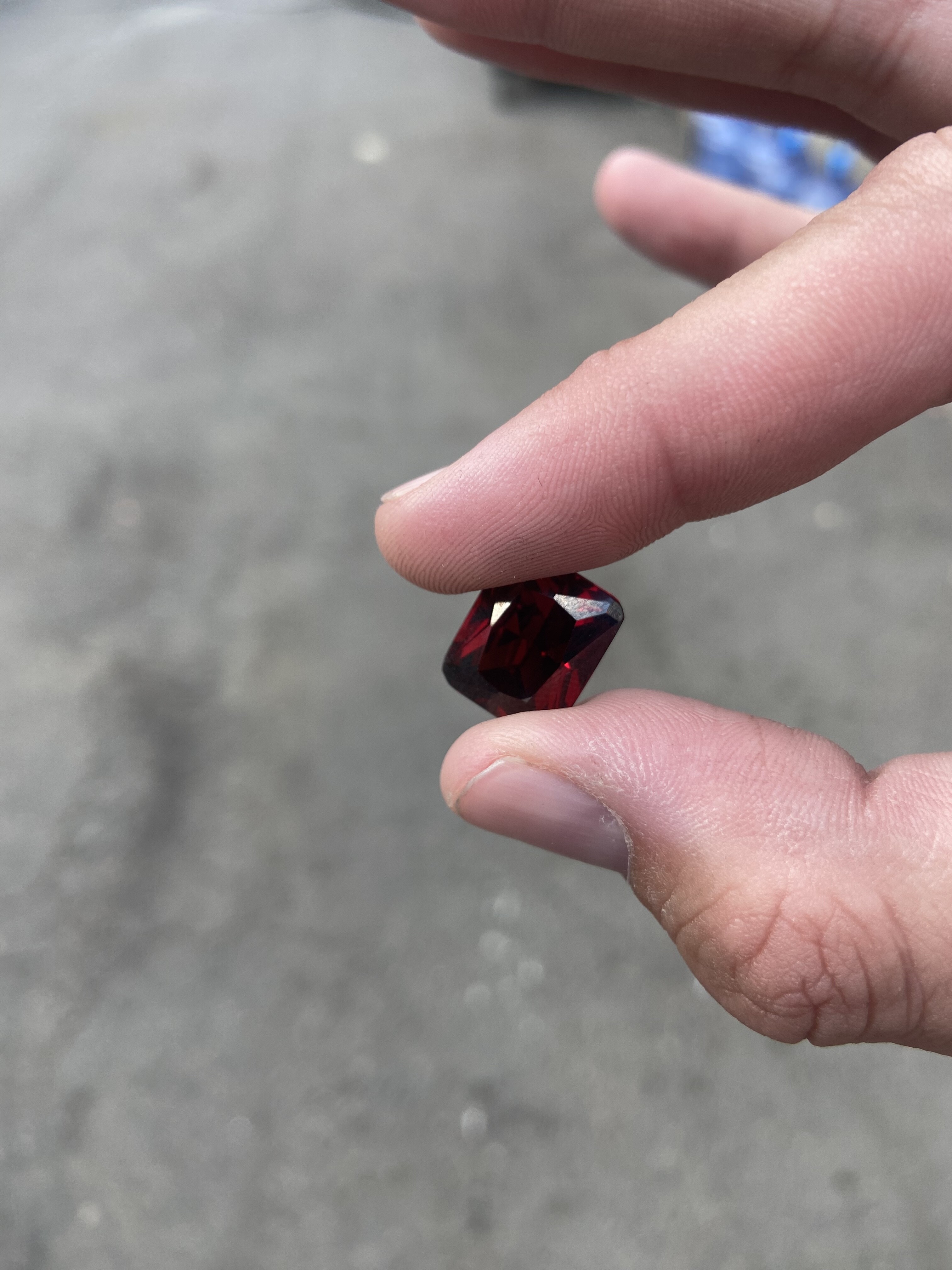
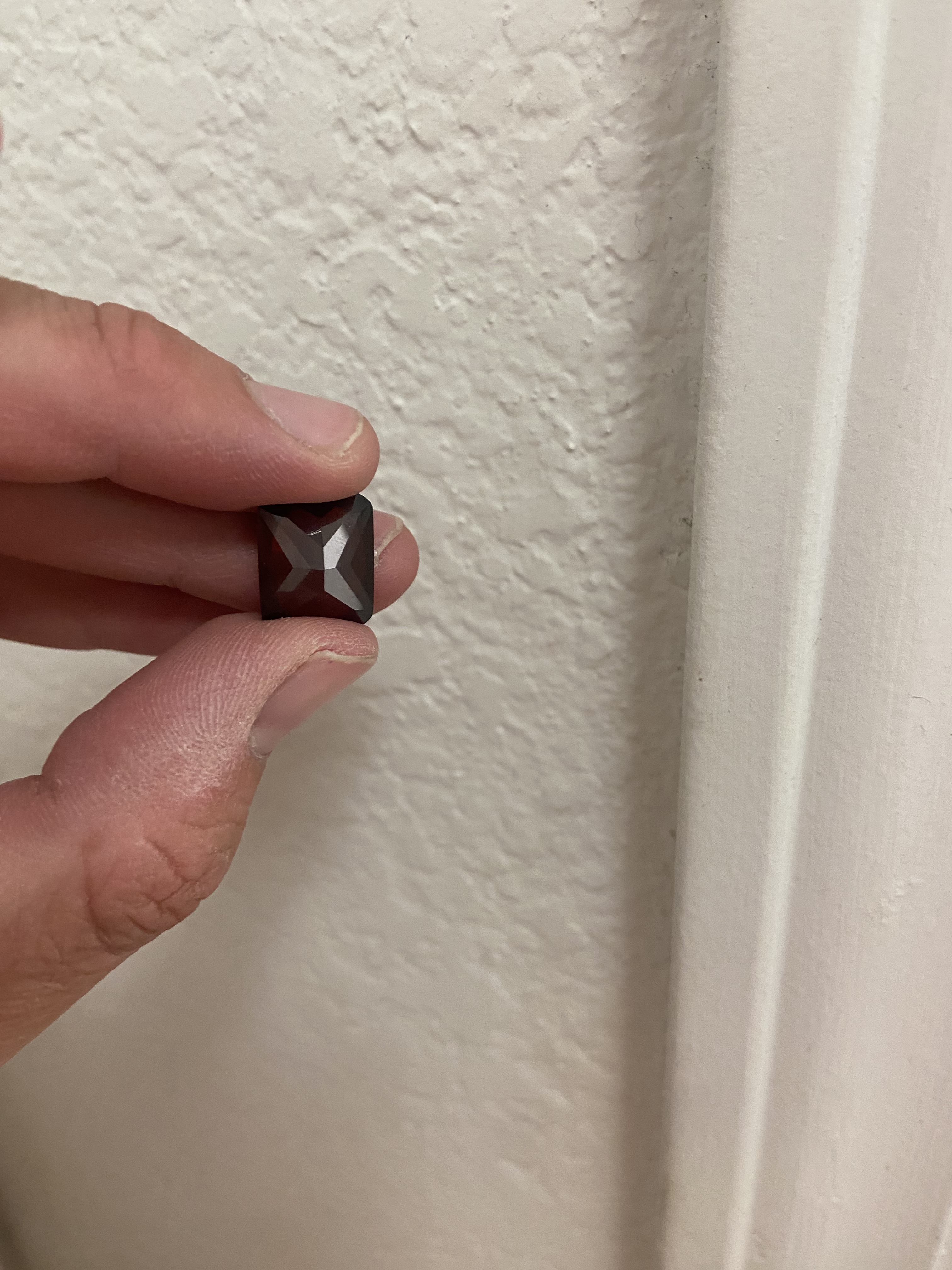
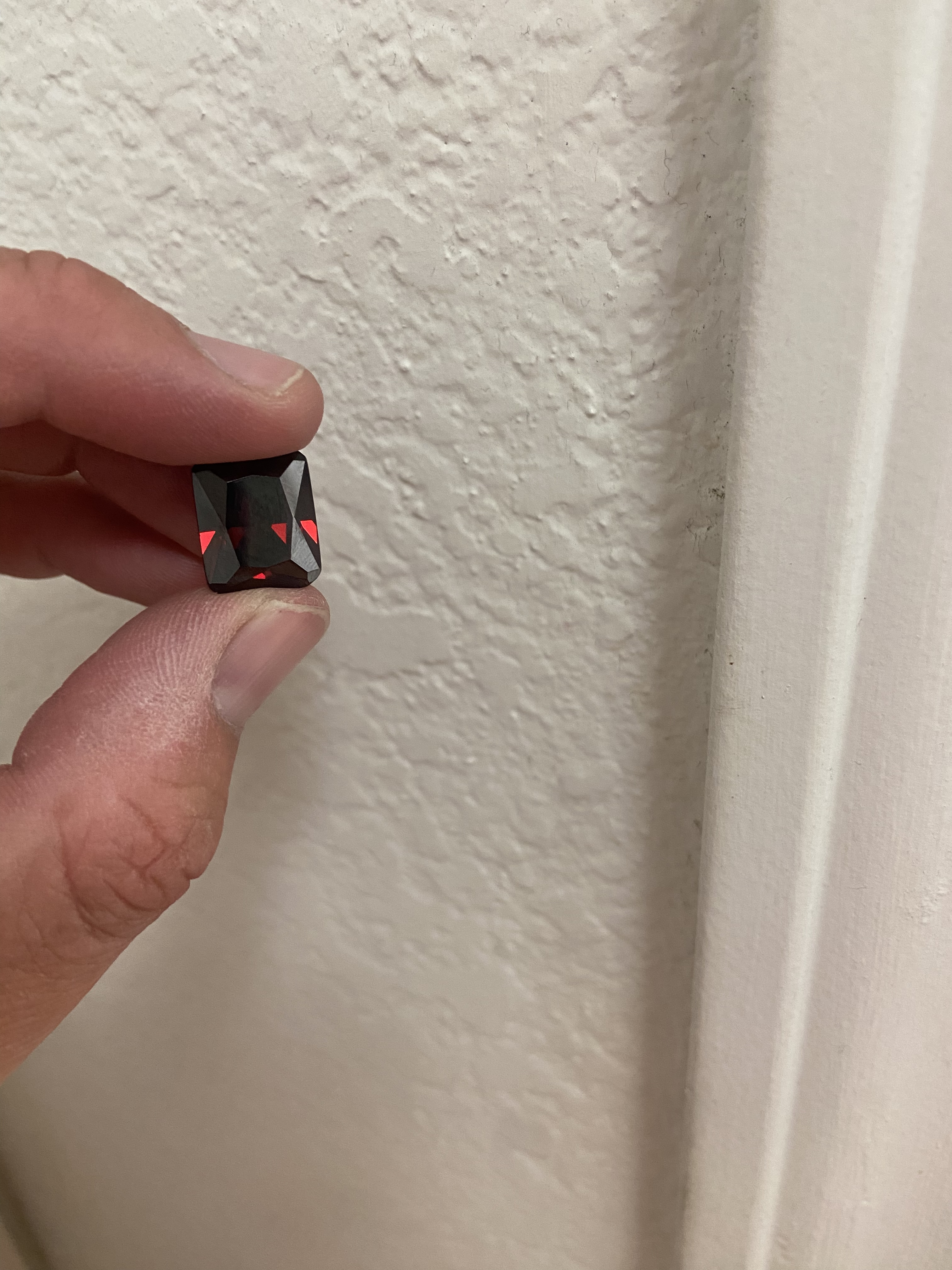
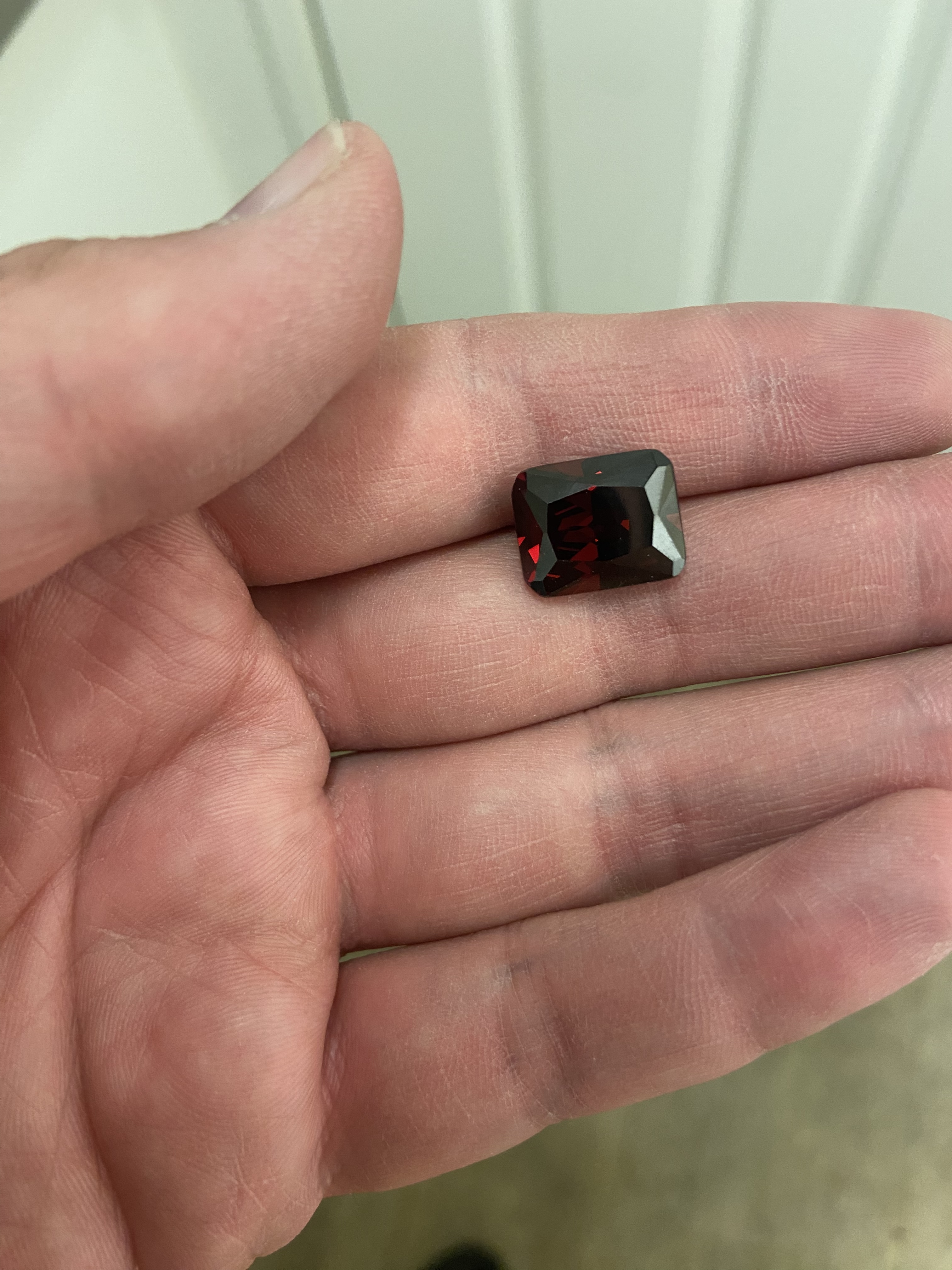
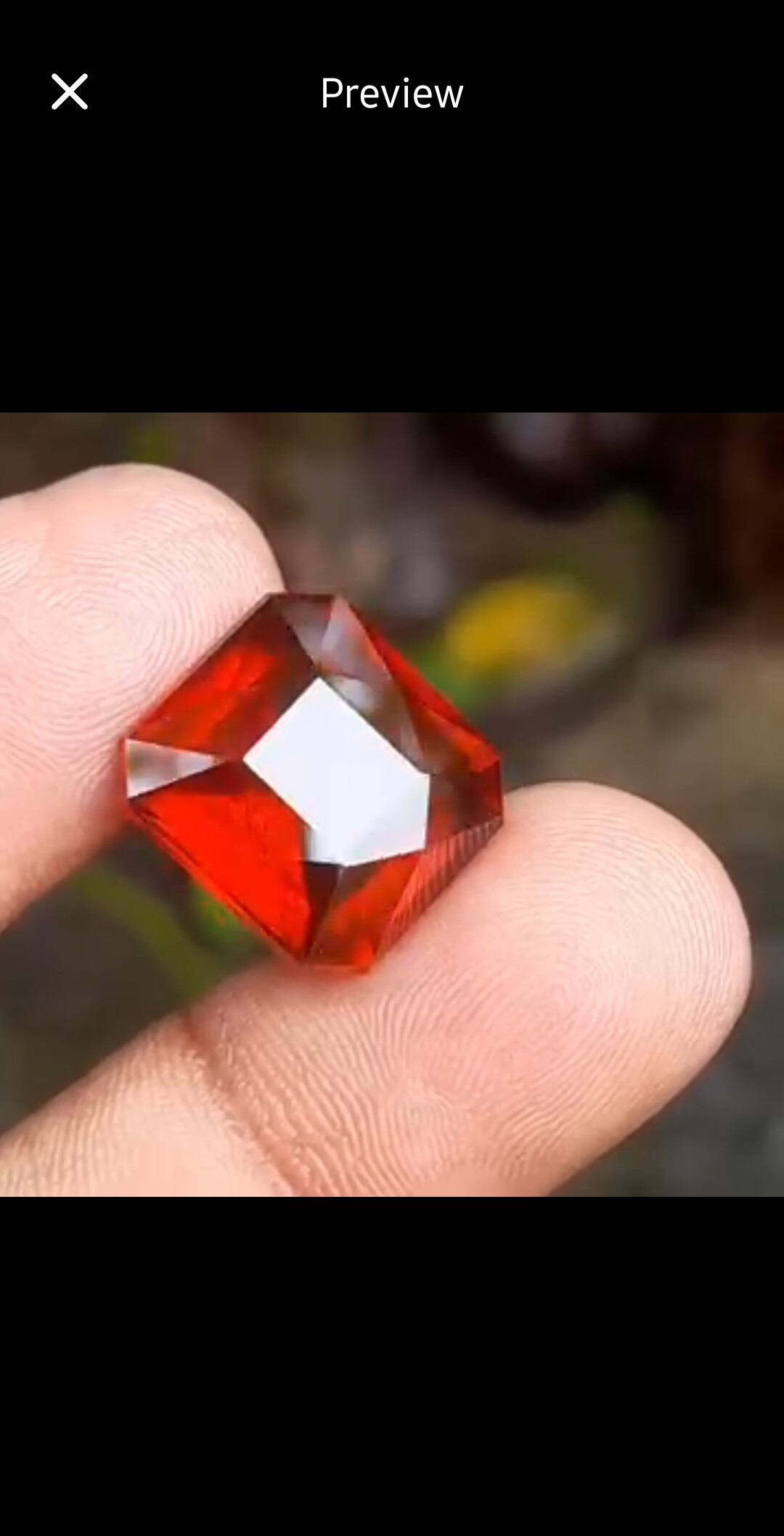
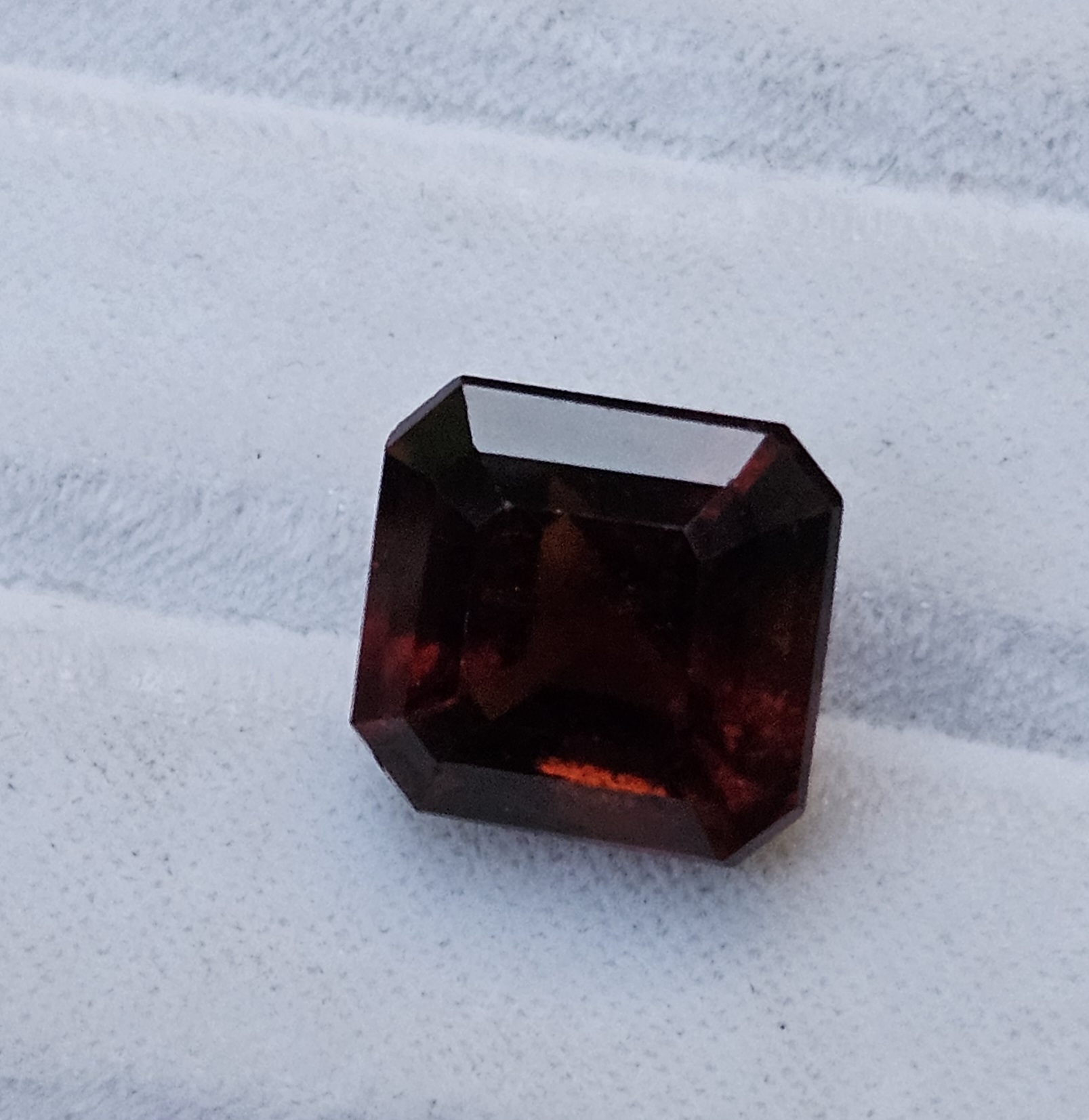
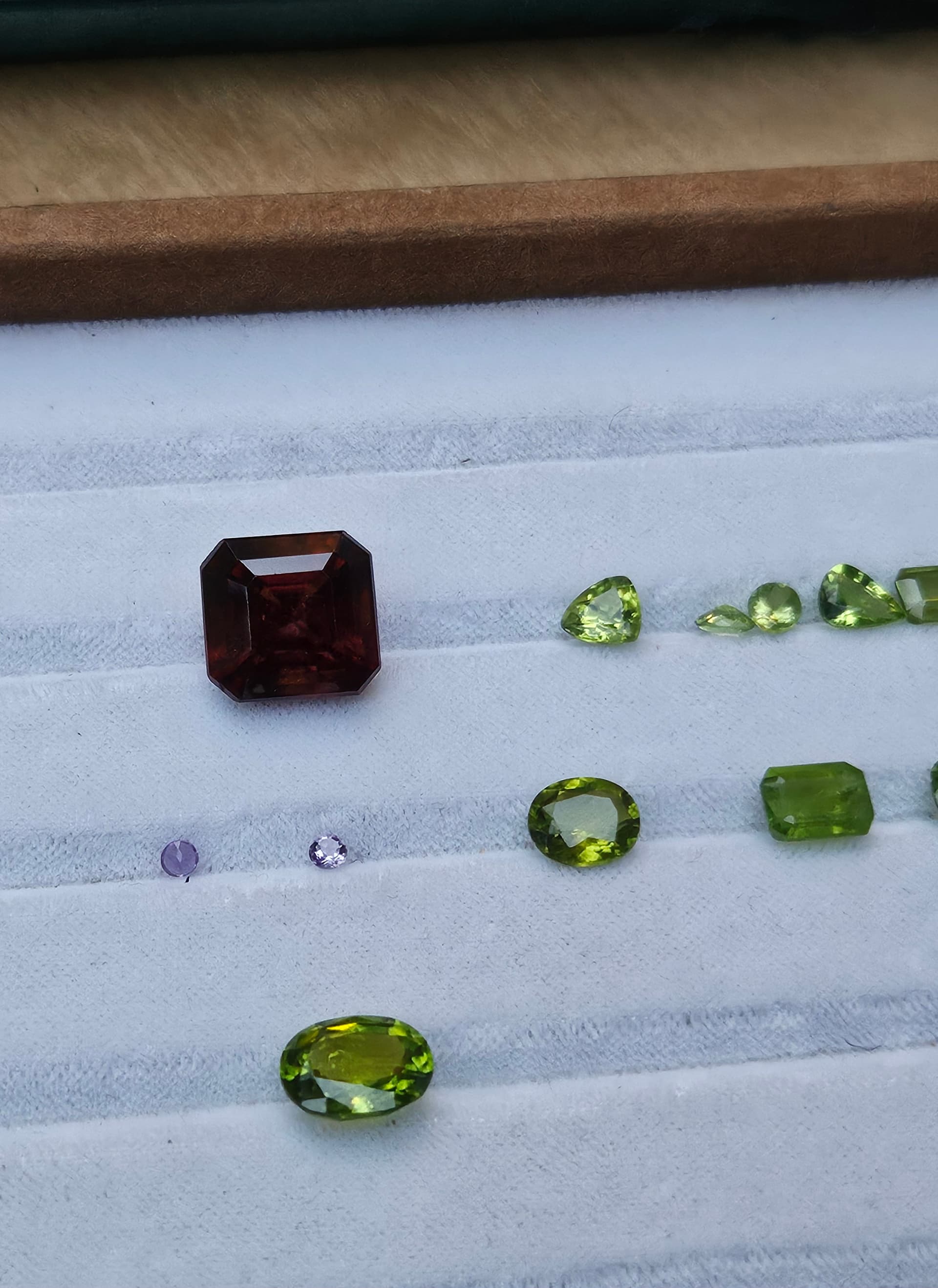
I recently was given this stone as part of a deal and am not sure if it is a Garnet or Ruby, I am leaning towards Garnet. It has weight to it and is a beautiful stone, I want to send it off to get certified but before I spend the money for the certification I wanted to ask for some feedback if anyone has any thoughts on it.
Thanks all!
Aaron
Hi Aaron,
Welcome to the community! That is a very nice stone. Unfortunately, it is nearly impossible to identify from images alone. There are many possible types/species of gems that are red. Elijah ( @ElijahR37015 ) provided a good example of a Hessonite Garnet.
Your stone could be a natural or lab grown version of:
Ruby, Garnet, Spinel, or Zircon
Or a number of simulants, like Cubic Zirconia (CZ) or Glass.
Having it identified by a local Gemologist or Gem Lab is the quickest path but may not be the cheapest approach, especially if it is one of the simulants. There are a few things you can do before spending money at a Lab or Gemologist. I highly recommend contacting a local Gem/Mineralogical Club, first. These are one of the easiest and most accessible resources where most members are willing to help and some members will have basic gemology tools/instruments handy for just an occasion. 
It would be good to know what tools you have. A 10x Loupe or Mag-Visor? A scale that can measure in Carats and Grams? These are very cheap and well worth investing in as you build your collection.
Some of the possible species can be disqualified by very simple tests. For instance, Zircon is double refractive, and displays strong birefringence. Under small magnification you most-likely will see two images of the facet edges. Look at the Zircon page above for examples of this optical property. If you don’t see this in your stone, Zircon would more likely not be a candidate.
Here is a good list of gem material comparing the Refractive Index and if they are double refractive or not.
Cheers!
1 Like
have to agree with TroyJ… pictures without physical and optical property measurements are not very useful in ID’ing much stuff. Specific gravity is a useful DYI measurement but garnet and ruby overlap… corundum stones are much harder than garnet, but you woudn’t want to scratch a cut stone… refractive index also overlaps… however, garnet is singly refractive being cubic, doesn’t display much birefringence except for some rare calcium/iron garnets, usually green colored… internal strain can cause crystal distortion leading some birefringence… get an informed local opinion first; the suggestion of a lcoal gem club is a great idea… even a professional jeweler who is interested with a very nice looking stone, might give you an informal opinion for free. look with a loup or magnifier for inclusions… natural stones tend to have more than synthetic… but without knowing inclusions, which is difficult to learn, you won’t be able to ID it…don’t spend money on a certificate is you can get it ID’d first… garnets should be distinguishable from rubies by optical methods… if it’s garnet, it still would be valuable. Synthetic gem garnets aren’t on the market… with rubies, it’s another matter… don’t pay $$$ on a formal appraisal and certificate if it turns out to be a simulant or a synthetic.
A dichroscope would be a good start in determination. Ruby is pleochroic, whereas garnet is not. But as @TroyJ49412 points out, there are other options as well. Refractive index, specific gravity, etc, as well as if there are any intersecting needle inclusions, the angles of those inclusions can also help determine the identity of the stone.
Good luck!
2 Likes
One test you may want to try to distinguish between ruby and garnet. Take a bowl of water and a small piece of polystyrene. Float your stone on the polystyrene on the water. Keep it away from the edges (surface tension effects). Get a very strong magnet (neodymium type) and hold it close to the stone. If it’s attracted it could be garnet (high iron content) if not then maybe ruby. I’d also see if it’s uv fluorescent (ruby). It’s a bit agricultural but can sway your thinking the right way.
2 Likes
Looks like a garnet, but like other members have said cant say for sure until some tests are completed.
Best kit which will save you a lot of time is a specific gravity test kit.
But it can not distinguish between natural and lab-grown.
I think ruby and garnets do overlap on readings, depending on the the type of garnet.
But definitely worth investing in a specific gravity kit.
Also the specific gravity of the stone will help eliminate a lot of others. That along with double refraction will narrow it down considerably
iron/manganese containing garnets have SpG’s that overlaps with corundum. The magnetic test mentioned by Jamiefort does detect iron. Pleochrosim is the best single bet, alothough weak to moderate, moderate to strong in ruby… Garnets are cubic and singly refractive. No pleochroism.
beware of synthetics and simulants as troyJ mentioned. Distinquishing synthetic rubies from natural require microscopic examination by an experienced gemmologist… garnets can be distinquished from ruby by moderate to weak pleochroism, garnets are cubic and don’t display pleochroisml, corundum stones are pleochroic to a weak to moderate extent… Iron/manganese containing garnets overlap corundum in specific gravity. The magnetic test does help with high iron/maganese garnets. Garnets are not man made except for industrial/scientific purposes eg. YAG doped with Nd for lasers. Garnets are too abundant to be worth making synthetically. If it is garnet, you still have a very nice gem. Without training and equipment, the best bet is to take it to a local gemologist. Some are available in local jewelry stores. Don’t spend the $$$$ to get it certified until ID’d locally.
almandine, spessartine, and andradite are Fe/Mn containing garnets. SpG is up to 4.3 for these garnets, with spessartite being the heaviest, all of them overlap ruby. Zircon is heavier yet at 4.6- to 4.7 for gem quality stones.