As we can see in both the Miriam Stone and the specimen I presented, the Cyanobacteria & Flagellates are large enough to see without a microscope. A jeweler’s loupe works well in zeroing in on their replicating structures.
BTW: The AMScope metallurgical/polarized microscope I’ve used for years finally went south. I am in need of a new circuit board, but I’ve not been able to locate one due to the instrument’s old age. It’s just like me, I suppose. I’m just getting worn out!!
What might be helpful, as well, is that I just finishing Kathy Sawyer’s “The Rock from Mars,” where she has documented the story of NASA’s AHL 84001. As I previously mentioned, the debate still continues on the actual presence of Martian microbes in their find, and this keeps the door open for specimens similar to yours & mine. As you may remember, their specimen sat on a shelf for over ten years before NASA was moved to investigate the stone further. Since then, there have been multiple meteorite specimens have undergone new research, such as “Murchison,” “Orguile,” and others. These examples can be reviewed if you were to enter “Cyanobacteria Meteorites” into your web browser. There are several really good papers written on the subject.
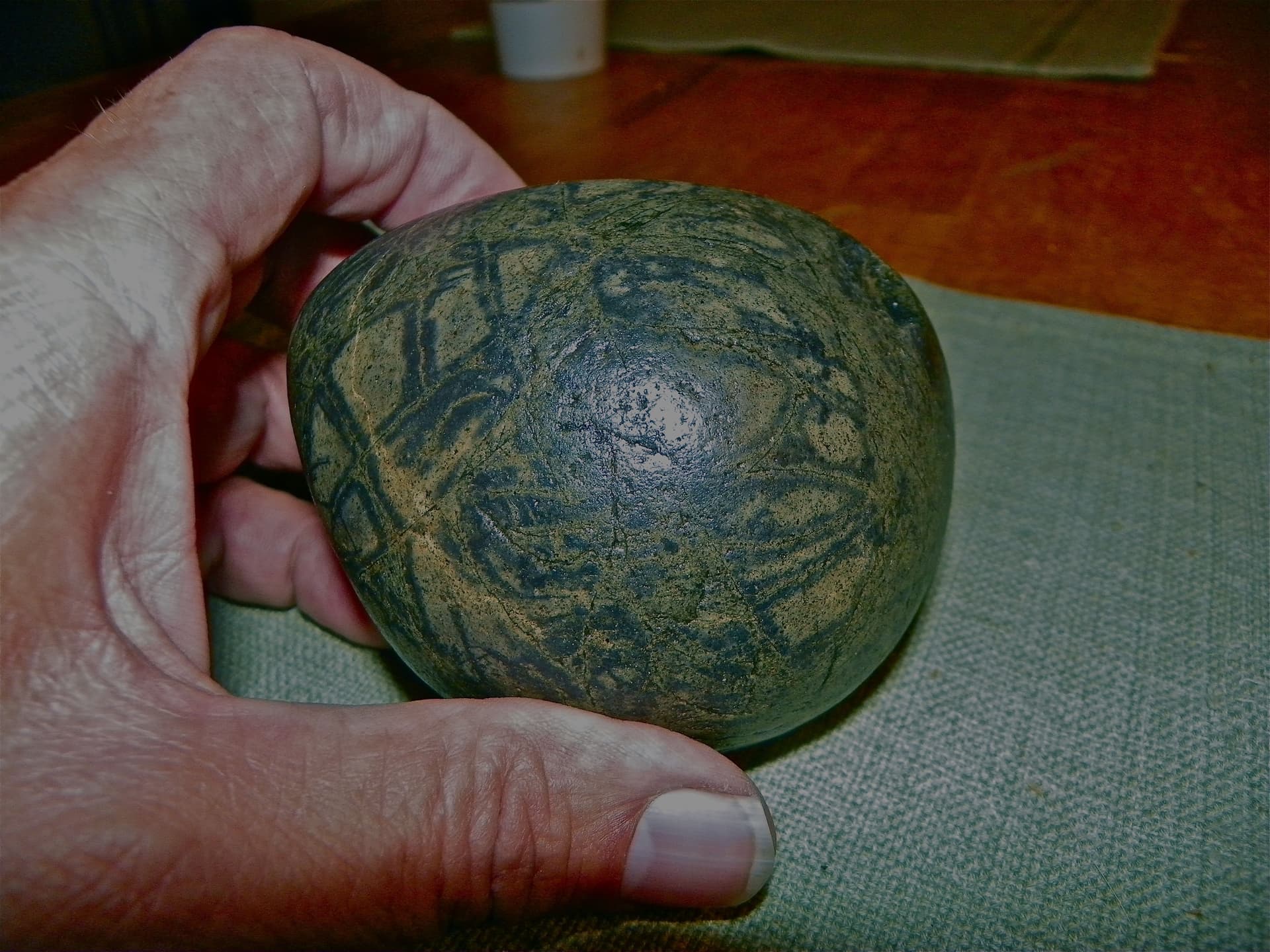
I will leave you with yet another cool specimen for your review. It resembles a Trapiche Emerald, which have been found in Columbia. It, too, draws a rare-earth magnet with ease. I like the ‘organic’ structure of this piece.
NASA’s “Saganet,” and NASA’s Astrobiology Department, have a number of good discussions on YouTube. It’s pretty fascinating material.
Have an awesome day!