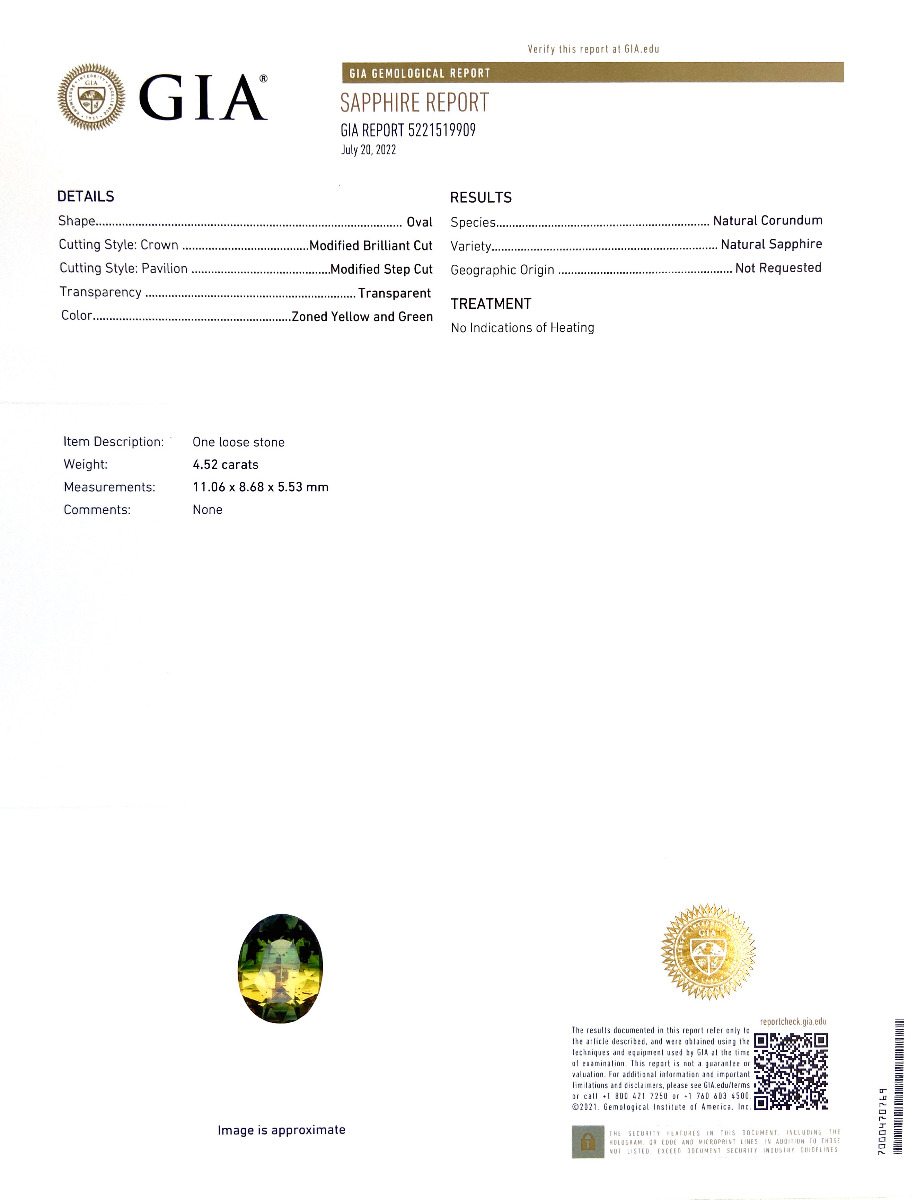
I am looking for GIA or IGS to help with the term Bi-Colour and Parti Colour Australian sapphires. how does one correctly define them? as I saw a good article from the Australian Factor’s Guild AFG. It must be done by looking down through the Table and seeing 2 or 3 different colours zoning within the table When rotating the stone and you see different Flashers of colours from around the girdle then this is NOT a Bi or Parti-Coloured Australian sapphire?
can you help please
Hi Edward,
Welcome to the forum! Several members here have lots of experience with Parti-Sapphires. Unfortunately, I am not one of them… still learning the ropes. 
If you haven’t seen this article on the IGS site, it has some good information on them:
Hopefully the more experienced members will chime in.
Cheers!
Troy
1 Like
Thank you for the link and yes it does help, it’s a pity that many sellers have got it wrong
Thank You
1 Like
Hi Edward,
You’re actually talking about 3 different effects in your question.
Parti coloured stones are stones that show two or three distinct colours to the naked eye in a single stone. The example Troy posted is a great example of a bi-coloured (2 coloured) sapphire of this type.
Colour zoning in sapphires is easier to see with magnification; a 10x loupe is usually enough. We see different concentrations of the same colour (ie. paler and darker blue) in many sapphires. These are growth marks, and as natural sapphire crystals are six-sided, the growth marks should be linear or angular (120°). If the growth marks are curved, it’s a sign the material is synthetic.
The third effect you refer to (looking from different angles) is pleochroism. This effect is due to the way light travels in different gem materials; you usually need a colour filter to see it clearly. As an example, using a Chelsea colour filter, you may see a ruby is transmitting a purplish red and an orangey red depending on the path the light travels through the stone.
Many gems are pleochroic, but few show this to the naked eye. An exception here is Andalusite, where you may see yellow, green or brown depending on the angle you look from.
I hope that helps. Kate Hamilton FGA
1 Like